
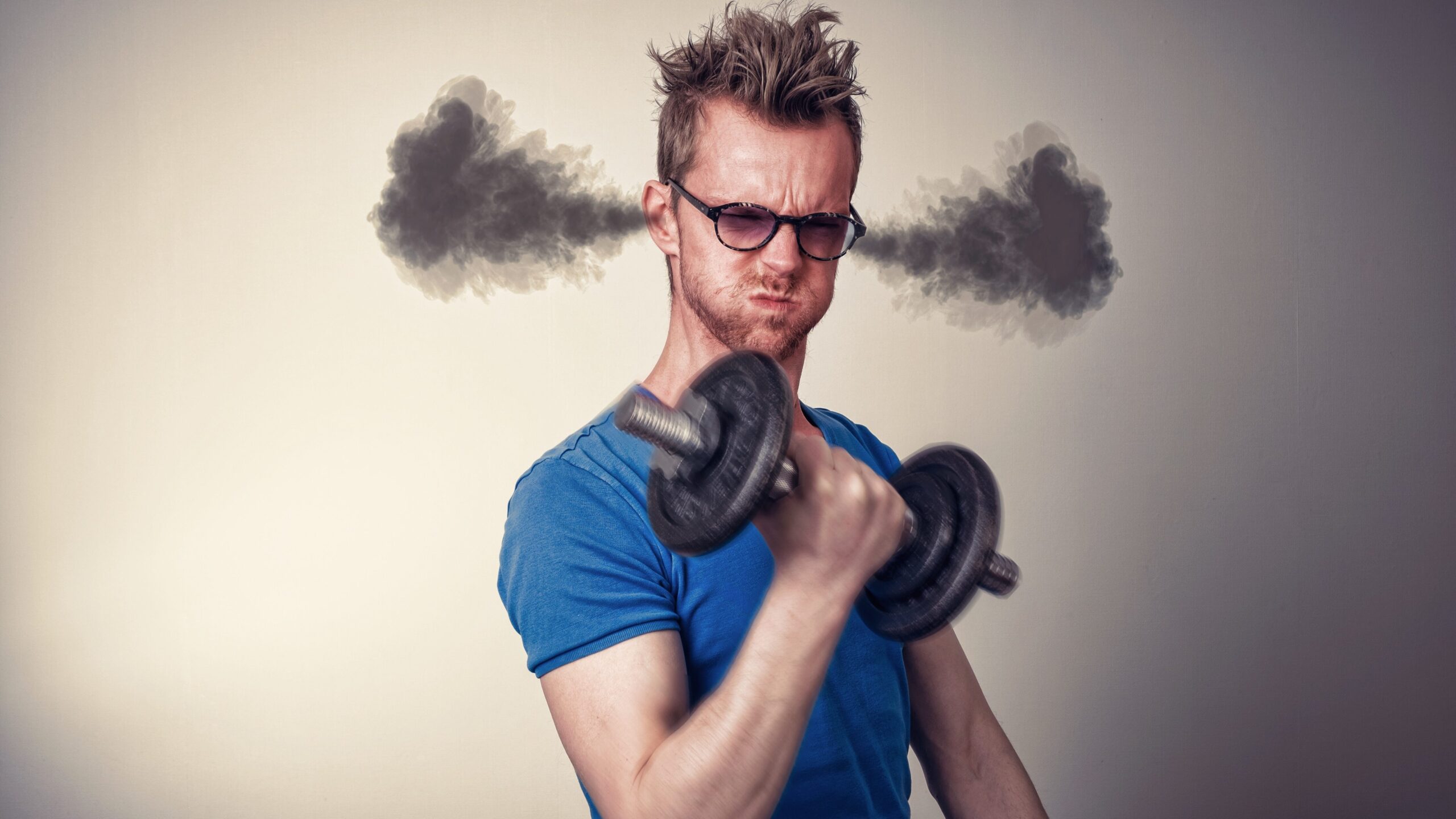
You wake up and your shoulders are already up near your ears. Nothing happened yet. No heavy lifting. No bad night’s sleep you can name. You’re just… tense. And you’ve tried everything – the massages, the stretching, the hot showers. Still there. Still braced.
What’s actually happening isn’t only in your muscles. There’s a second layer driving this. And until you understand it, nothing you do to the muscles will stick.
In this article, you’ll finally understand why.
Does This Sound Familiar?
Tom is a 39-year-old solicitor. His days are mostly desk work – calls, contracts, the occasional tense meeting. Nothing physically demanding. His work ends at a reasonable hour. He eats reasonably well. He gets to the gym when his schedule allows, which isn’t always.
For the past three years, the tension in his neck and shoulders has been a constant. Not an injury. Not a strain. Just permanently on. He goes to bed braced and wakes up the same way.
And so he’s tried what seemed logical. A new office chair. A standing desk. Regular massages. The occasional session with a gym trainer to work on his posture. He makes an effort – even if the routine hasn’t always been consistent. After a massage, he feels noticeably better. For a day, sometimes two. Then the tension comes back, exactly as before. He’s starting to wonder if this is just what his body does now.
What nobody has told Tom – and what most approaches to this kind of tension miss – is that the muscles themselves are not the full story. The tension is absolutely real, and it absolutely lives in the muscles. But there’s a second factor driving it. And that second factor is why it always returns. You can work on the muscle as often and as skillfully as you like. If the second factor isn’t addressed, the nervous system simply re-imposes the same state within days.
Most of us were taught to think about muscle tension as a mechanical problem. You sit badly, you carry something heavy, you sleep at an odd angle. Something is wrong with the structure, so you fix the structure. And that makes sense – up to a point. But when the problem is persistent, when it doesn’t resolve with rest, when it comes back reliably no matter what you do to address it physically, the mechanical explanation alone stops being enough.
Because there’s another kind of tension. It doesn’t come from anything you’ve done with your body. It comes from what your brain thinks the world is asking of you.
What’s Actually Happening Inside the Body
The nervous system is not subtle.
When it detects a threat – any threat, whether you’re about to be in a car accident or you’ve just opened an email that made your stomach drop – it triggers the same response. Muscles contract. The body braces. The system prepares for action.
That response is genuinely useful in a crisis. The problem is that the nervous system doesn’t distinguish between a physical threat and a psychological one. A difficult conversation you’re dreading. A sense of being behind, always slightly behind. A workload that never quite empties. All of it activates the same emergency circuitry that would kick in if someone came at you in the street.
And here’s what makes it compound.
Modern stressors are almost never resolved by physical action. You don’t run from the meeting. You don’t fight the email. You sit with it, manage it, push through it. The threat passes – but the muscular activation doesn’t fully unwind. Over time, with repeated activation and incomplete release, the nervous system begins to treat this elevated muscle activity as the body’s new normal. Researchers studying chronic muscle pain and stress-related motor control describe this as a form of central sensitisation – where the threshold for releasing muscle tension rises, and the guarding state becomes self-sustaining.

And when the nervous system perceives sustained, low-grade threat – not dramatic, acute threat, but the everyday kind that doesn’t quite switch off – it activates what researchers describe as a “guarding” response. An involuntary bracing of muscles around vulnerable areas. Neck. Jaw. Shoulders. Lower back. Not because those areas are injured. But because the brain is preparing to protect them.
This is why the jaw aches in the morning. Why the trapezius is rock-hard before the day has even started. This is clenching – a distinct, quieter phenomenon than grinding. The jaw is pressed shut during sleep, not moving, but held. Firmly, persistently, silently. The brain is running its emergency protocol and the muscles are following orders.
Researchers who study jaw muscle activity during sleep have found that stress and the nervous system’s threat response are among the strongest drivers. A systematic review published in Frontiers in Neurology found a consistent association between psychological stress and this kind of jaw muscle hyperactivity, with the nervous system’s central pathways – not dental structure – identified as the primary regulatory mechanism.
And it doesn’t stop at the jaw. Those same tense neck and shoulder muscles – the trapezius especially – have a direct relationship with headaches. Research published in The Journal of Headache and Pain found that increased muscle changes in the trapezius were significantly associated with both higher headache frequency and greater neck pain in people with tension-type headache. The muscle tension and the headache are not two separate problems. They are the same problem at two different addresses in the same system.
In other words, it’s not your jaw’s fault. It’s not your posture’s fault. It’s your brain’s threat system doing exactly what it was built to do – and your muscles faithfully carrying out the signal.
Crucially, this pattern tends to feed itself. Stress drives the clenching. And the clenching, in turn, activates the same brain-body stress pathway – with researchers noting increases in stress hormones in bruxism patients – which keeps the nervous system primed. It’s a loop that the body, left to its own devices, has difficulty unwinding.
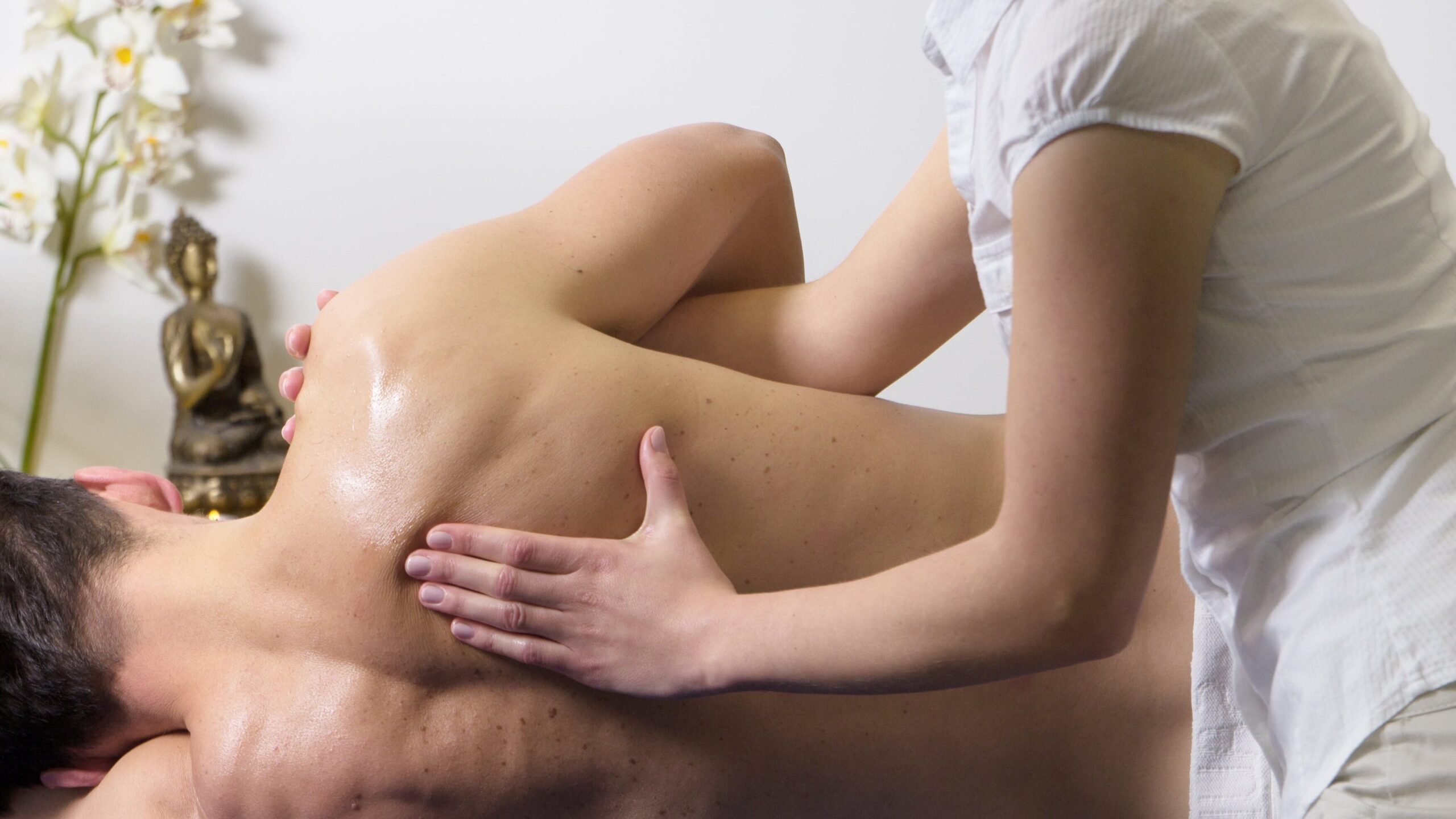
This is why massage and stretching provide temporary relief but the tension always comes back. You are addressing the output – the tight muscle, the aching jaw – but not the signal that keeps regenerating it.
Why the Usual Solutions Don’t Stick
So why do people stay stuck?
Because the solutions they try are all aimed at the muscle. Stretch it. Heat it. Work it out. Press on it hard enough that it gives. These things can provide temporary relief – real relief, for an hour or a day. But they don’t change the signal the nervous system is sending. So the tension comes back. And over time, people start to feel like their body is simply broken. That this is just how they are now.
It isn’t.
But here’s where the picture gets genuinely complicated – and this is the part that makes the difference.
The nervous system doesn’t exist in isolation. It’s in constant conversation with everything else. And when the body is chronically tense, several systems are usually pulling in the same direction at once.
What you eat. Blood sugar instability and poor gut health both increase systemic inflammation – and inflammation directly sensitises the nervous system’s pain and tension response. What you put in your body shapes the baseline at which your nervous system operates.
Sleep. Research has found that sleep deprivation and the stress response are genuinely reciprocal – poor sleep raises the body’s stress hormone output, and elevated stress hormones then disrupt sleep. To understand this: when you experience stress, the brain triggers a chain reaction through what’s called the hypothalamic-pituitary-adrenal axis – a communication pathway running from the brain down to the adrenal glands sitting above the kidneys, which then release cortisol into the bloodstream. Deep, restorative sleep is one of the few things that reliably suppresses that pathway and lets it reset. If you’re staying up late regularly, that reset never fully happens, and the body carries accumulated tension forward into the next day.
Your mental state. When your threshold for irritation drops – when small things feel suddenly overwhelming, when you notice yourself reacting faster or harsher than you’d want to – that isn’t a character flaw. That’s what happens when the nervous system has been running at elevated alert without adequate recovery for long enough. And when psychological stress persists without a physical outlet, the nervous system remains in a state of sustained activation – and that activation has to go somewhere. Researchers studying somatic symptoms have found that the body reliably expresses what the mind has been unable to resolve: jaw tension, headaches, the persistent ache at the back of the neck.
Movement. Physical activity does help break the cycle. Regular moderate exercise is one of the most effective tools for reducing baseline stress hormone levels over time. It gives the body the physical action that the stress response was preparing for but never got – it metabolises the cortisol, uses up the adrenaline, and signals to the nervous system that the threat has passed. But the relationship has a nuance worth knowing. The cortisol spike that comes with a hard workout is normal and adaptive; the body recovers from it within a few hours. What becomes counterproductive is chronic overtraining – pushing through intense sessions without adequate recovery, week after week – which keeps resting cortisol elevated even between sessions. For someone already running on empty, that cumulative load matters.
So the real question becomes: what does it actually take to change the signal, not just manage the symptom?
What to Do Differently
The key shift is to stop trying to force the muscle to release, and to start giving the brain new information. Because that’s what it’s waiting for – evidence that the threat has passed. And we’re going to combine that with restoring movement in a way the nervous system can actually use.
If you’re not currently active
Don’t start with the gym. Start with a proper warm-up routine each morning – five to ten minutes of gentle, deliberate movement through the joints. Shoulders, neck, hips, spine. Not as a workout – as a signal to the body that it’s safe to move. Then build in a daily walk. Not fast, not competitive. Just consistent. Twenty to thirty minutes. Research consistently shows that regular moderate movement – at an intensity that feels energising rather than depleting – is more effective at reducing baseline stress hormones and improving stress resilience over time than sporadic high-intensity sessions. Walking counts. It always has.

If you already exercise regularly
The adjustment isn’t doing more. It’s checking whether the pattern of how you train is working for or against you. The cortisol spike from a hard workout is not the problem – it clears within a few hours and is part of how exercise builds resilience. The problem is training intensely five or six days a week without sufficient recovery, while already carrying a high stress load. If that sounds familiar, replacing some of those sessions with moderate-intensity movement – walking, light cycling, swimming – delivers the stress-metabolising benefit without the recovery debt.
Sensory grounding – before anything else
Before you stretch, before you reach for the heat pad, try this first. Sit or stand still for two minutes. Actively look around the room and name – silently – five things you can see. Not quickly. Slowly. The blue of a mug. The shadow behind a door. Really look.
Then, slowly, roll your shoulders back. Not to stretch them. Just to feel what they do. Notice. That’s the goal – not range of motion, not release. Just noticing. Deliberate sensory attention activates different neural pathways than automatic bracing, and it begins to give the nervous system information that the emergency is over.
Progressive Muscle Relaxation – done properly
Most people have heard of this. Far fewer have actually been guided through it at the pace and depth that makes a difference. And here’s why that matters: when muscles have been chronically tense for months or years, people genuinely lose track of what relaxed feels like. The elevated baseline becomes the new normal. Trying to “just relax” doesn’t work because there’s no clear reference point anymore. You can’t remember what you’re aiming for.
This is precisely the problem that Edmund Jacobson was trying to solve when he developed this method in the 1930s. His insight was elegant: you can’t reach muscular relaxation through willpower alone, but you can create it deliberately – and by deliberately tensing a muscle before releasing it, you trigger something the body does automatically.
Sitting at the junction between muscle and tendon, there are tiny sensory structures called Golgi tendon organs. Their job is to monitor how much tension a muscle is generating – and when that tension is deliberately held and then released, they send a signal to the spinal cord that actively switches the muscle off. Not asks it to switch off. Switches it off. The result is a depth of relaxation that willpower alone cannot produce, because the nervous system is doing it involuntarily, through a hardwired spinal reflex. You’re not persuading the muscle to let go. You’re bypassing the argument entirely.
Here’s how to use that.
Take a slow, deep breath in – and as you do, deliberately tense a specific muscle group. The shoulders, for example. Hold it for five to seven seconds. Feel the tension. Then, on the exhale, release. Let the muscle go completely. Pay attention to what follows – the warmth, the slight heaviness, the sense of the muscle becoming liquid. That contrast is not just a feeling. It’s the signal being processed. That’s how you rebuild the felt reference for what relaxed actually means in that part of your body.
Then move to the next muscle group – jaw, hands, lower back – working through the body systematically, tensing and releasing, breath by breath.
A systematic review published in 2024, drawing on evidence from 24 studies, found that Progressive Muscle Relaxation consistently reduces stress, anxiety, and related physical symptoms in adults. There is also a registered clinical trial examining Jacobson’s method specifically for jaw and temporomandibular tension – recognising the direct link between psychoemotional stress and jaw muscle dysfunction.
The Takeaway
Tom eventually stopped searching for the right massage therapist and started paying attention to what was happening when his body felt worst. The pattern became clear: the tension peaked during the most pressured stretches of work, and briefly eased when he moved consistently and slept well. The muscles were never the source. They were the readout.
If you recognise Tom in yourself – the person who’s been working on the problem from the outside without quite reaching it – here’s where to start. Some gentle movement tomorrow morning. Two minutes of grounding before anything else. And when the guided relaxation session is ready, give it a proper try.
This is Your Space Today – delivering the science-backed clarity you need every week, because your health journey deserves expert guidance.
If you found value in this article, I’d really appreciate it if you’d share it with friends or family who might be struggling with similar issues. Sometimes, understanding that we’re not alone in this struggle, and that there are real, science-based explanations for what we’re experiencing – that knowledge alone can be incredibly empowering.
This article is for educational purposes only and does not constitute medical advice, diagnosis, or treatment. Always consult with your healthcare provider regarding any health concerns. You can find detailed information here.
Thank you so much for spending this time with me today. Until next time, take care of yourself. You deserve it.
Scientific References
If you’d like to explore the research behind this episode, here are selected peer-reviewed studies supporting the key points discussed.
- American Psychological Association (2023). Stress effects on the body. https://www.apa.org/topics/stress/body
- Åsberg, M., et al. (2014). Prevalence and course of somatic symptoms in patients with stress-related exhaustion. BMC Psychiatry, 14, 118. https://pmc.ncbi.nlm.nih.gov/articles/PMC3999732/
- Balbo, M., Leproult, R., & Van Cauter, E. (2010). Impact of sleep and its disturbances on hypothalamo-pituitary-adrenal axis activity. International Journal of Endocrinology, 2010, 759234. https://pubmed.ncbi.nlm.nih.gov/20628523/
- Caplin, A., et al. (2021). The effects of exercise intensity on the cortisol response to a subsequent acute psychosocial stressor. Psychoneuroendocrinology, 131, 105336. https://www.sciencedirect.com/science/article/pii/S0306453021002109
- Castrillon, E. E., et al. (2024). The neural substrates of bruxism: current knowledge and clinical implications. Frontiers in Neurology, 15, 1451183. https://www.frontiersin.org/journals/neurology/articles/10.3389/fneur.2024.1451183/full
- Chemelo, V. dos S., et al. (2020). Is there association between stress and bruxism? A systematic review and meta-analysis. Frontiers in Neurology, 11, 590779. https://www.frontiersin.org/journals/neurology/articles/10.3389/fneur.2020.590779/full
- Conrad, A., & Roth, W. T. (2007). Muscle relaxation therapy for anxiety disorders: it works but how? Journal of Anxiety Disorders, 21(3), 243–264. https://www.sciencedirect.com/science/article/abs/pii/S0887618506001174
- Corazza, D. I., et al. (2013). Influence of chronic exercise on serum cortisol levels in older adults. European Review of Aging and Physical Activity, 11, 25–34. https://link.springer.com/article/10.1007/s11556-013-0126-8
- Dote-Montero, M., et al. (2021). Acute effect of HIIT on testosterone and cortisol levels in healthy individuals: a systematic review and meta-analysis. Scandinavian Journal of Medicine & Science in Sports, 31(9), 1757–1772. https://onlinelibrary.wiley.com/doi/10.1111/sms.13999
- Ferendiuk, E., et al. (2019). Progressive muscle relaxation according to Jacobson in treatment of patients with temporomandibular joint disorders. Folia Medica Cracoviensia, 59(3), 113–122. https://pubmed.ncbi.nlm.nih.gov/31891364/
- Fernández-de-las-Peñas, C., et al. (2023). The cervical spine in tension type headache. Musculoskeletal Science and Practice, 66, 102780. https://www.sciencedirect.com/science/article/pii/S2468781223000656
- Hackney, A. C., & Walz, E. A. (2013). Hormonal adaptation and the stress of exercise training: the role of glucocorticoids. Trends in Sport Sciences, 20(4), 165–171. https://pmc.ncbi.nlm.nih.gov/articles/PMC5988244/
- Jacobson, E. (1938). Progressive Relaxation (2nd ed.). University of Chicago Press.
- Kaya, E., et al. (2025). Bruxism and stress: ultrasonographic masseter muscle assessment and salivary melatonin-cortisol dynamics. Journal of Oral Rehabilitation, 52, 892–901. https://pmc.ncbi.nlm.nih.gov/articles/PMC12408974/
- Khir, S. M., et al. (2024). Efficacy of progressive muscle relaxation in adults for stress, anxiety, and depression: a systematic review. Psychology Research and Behavior Management, 17, 345–365. https://pmc.ncbi.nlm.nih.gov/articles/PMC10844009/
- Lee, Y.-H., et al. (2025). Clinical, psychological, and hematological factors predicting sleep bruxism in patients with temporomandibular disorders. Scientific Reports, 15, Article 19148. https://www.nature.com/articles/s41598-025-03339-3
- Luo, Y., et al. (2024). Progressive muscle relaxation alleviates anxiety and improves sleep quality among healthcare practitioners in a mobile cabin hospital. Frontiers in Psychology, 15, 1337318. https://www.frontiersin.org/journals/psychology/articles/10.3389/fpsyg.2024.1337318/full
- Madsen, B. K., et al. (2016). Neck and shoulder muscle strength in patients with tension-type headache: a case-control study. Cephalalgia, 36(8), 745–753. https://journals.sagepub.com/doi/full/10.1177/0333102415576726
- Nollet, M., Wisden, W., & Franks, N. P. (2020). Sleep deprivation and stress: a reciprocal relationship. Interface Focus, 10(3), 20190092. https://royalsocietypublishing.org/rsfs/article/10/3/20190092/64087/Sleep-deprivation-and-stress-a-reciprocal
- Passatore, M., & Roatta, S. (2006). Influence of sympathetic nervous system on sensorimotor function: whiplash associated disorders as a model. European Journal of Applied Physiology, 98(5), 423–449. https://pubmed.ncbi.nlm.nih.gov/17036216/
- Porges, S. W. (2011). The Polyvagal Theory: Neurophysiological Foundations of Emotions, Attachment, Communication, and Self-Regulation. W. W. Norton & Company.
- Ring, M. (2025). An integrative approach to HPA axis dysfunction: from recognition to recovery. American Journal of Medicine, 138(10), 1451–1463. https://www.amjmed.com/article/S0002-9343(25)00353-5/fulltext
- Sollmann, N., et al. (2023). Headache frequency and neck pain are associated with trapezius muscle T2 in tension-type headache among young adults. The Journal of Headache and Pain, 24, 86. https://link.springer.com/article/10.1186/s10194-023-01626-w
- Teixeira, R. R., et al. (2015). Chronic stress induces a hyporeactivity of the autonomic nervous system in response to acute mental stressor and impairs cognitive performance in business executives. PLoS ONE, 10(2), e0116312. https://journals.plos.org/plosone/article?id=10.1371/journal.pone.0119025
- Torres, R., Koutakis, P., & Forsse, J. (2021). The effects of different exercise intensities and modalities on cortisol production in healthy individuals: a review. Journal of Exercise and Nutrition, 4(4). https://www.journalofexerciseandnutrition.com/index.php/JEN/article/view/108
- Woolf, C. J. (2011). Central sensitization: implications for the diagnosis and treatment of pain. Pain, 152(3 Suppl), S2–S15. https://pmc.ncbi.nlm.nih.gov/articles/PMC3268359/
- Yaribeygi, H., et al. (2017). The impact of stress on body function: a review. EXCLI Journal, 16, 1057–1072. https://doi.org/10.17179/excli2017-480
- Yap, A. U., & Chua, A. P. (2016). Sleep bruxism: current knowledge and contemporary management. Journal of Conservative Dentistry, 19(5), 383–389. https://pmc.ncbi.nlm.nih.gov/articles/PMC5026093/