
You wake up with a dry mouth. You make coffee. By 11am there’s a headache you can’t quite place. By 3pm your thinking has gone soft at the edges.
You check your sleep. Your stress. Your screen time.
The one thing almost nobody checks: how much you’ve actually had to drink today -and whether what you’re drinking is doing what you think it is.
Welcome to Your Space Today. Where we decode stress, burnout, and mental fatigue.
Meet Joel
Joel is 37, works in IT support, and drinks what he’d call a normal amount of water -a glass or two with meals, plus however many coffees get him through the day. Four, on a bad one.
He’s been getting mid-morning headaches. Nothing dramatic. A low, persistent pressure somewhere behind his eyes, reliably appearing around 10am. He assumed it was screen time. Or maybe he needed new glasses. He also noticed something odd: he consistently felt better after lunch -not because of the food particularly, but because lunch is one of the few moments in his day when he actually drinks a full glass of something.
A few weeks ago, he did something almost by accident. He bought a 1.5-litre bottle from the vending machine and kept it on his desk as a loose tracker. At the end of the first week, the number stopped him cold.
On most days, the bottle was still more than half full when he went home.
He’d been blaming screens, stress, bad sleep -everything except the simplest variable. And even when he thought about water, he reassured himself he was probably fine, because he didn’t feel particularly thirsty.
That’s the trap. Thirst isn’t a precise gauge -it’s a signal that drifts out of sync with what your body actually needs, especially once intake has been low for a while. People who consistently drink less than recommended often don’t feel notably thirsty for it. What does seem to track is the other direction: when low drinkers increase their intake, people often notice less fatigue, less brain fog, and a mood lift they didn’t expect -because they hadn’t realised how flat they’d actually been.
The gap between what we think we’re drinking and what we’re actually drinking tends to run one way: under, not over.
In a moment, we’ll get into why this gap isn’t just about feeling tired -it’s connected to something happening to your blood that most people never think about. But here’s where this gets really interesting: so why does this gap open up in the first place, and why doesn’t your body just tell you?
What’s Actually Happening Overnight
Every night, your body quietly loses fluid -through breathing, through perspiration you can’t feel. By the time your alarm goes off, the average adult is down somewhere between 400 and 600ml. Your brain has been working to compensate: a hormone called vasopressin rises during sleep to signal your kidneys to hold on to water rather than lose it. Researchers studying this overnight switch found the effect is concentrated in the later stages of the sleep cycle, and human sleep studies show a matching pattern: people sleeping six hours or less tend to wake more dehydrated than those who get closer to eight.
Here’s why that overnight gap is worth taking seriously, and not just as a “feel a bit off” problem. When your body is short on fluid, your blood gets thicker, more concentrated, more viscous. Thicker blood doesn’t flow as smoothly, and it clots more easily. A clot that forms in a narrowed or already-stressed blood vessel is exactly the kind of event behind a heart attack or a stroke.
This matters more for some people than others. As we get older, the thirst signal itself gets quieter, not from inattention, but because the part of the nervous system that generates it becomes less responsive with age. Research on this shows older adults can be running a real fluid deficit without feeling thirsty the way a younger person would, so the dehydration, and the blood-thickening that comes with it, can sit there unnoticed for longer. That’s likely part of why researchers looking specifically at this connection found a real association between dehydration and stroke risk in a very large group of adults over eighty. It’s an observational study, so it shows a link rather than proof that dehydration alone causes a stroke, and the researchers are careful to say so themselves. But the underlying mechanism, blood thickening and clotting more readily, is well established, especially for the older people in your life whose own body won’t reliably remind them to drink.
And on top of that mechanical risk, mild dehydration on its own, something as small as one to two percent of your body weight, has been shown to measurably affect mood, concentration, and headache frequency, often before you’d think to feel thirsty.
Does Coffee Count?
A lot of people have been told that coffee doesn’t count toward your fluid intake, or worse, that it actively dehydrates you. The research says otherwise, with one caveat: caffeine only has a meaningful diuretic effect at high doses, and at the amounts most people actually drink, the fluid in the coffee offsets it. A study comparing coffee drinkers’ hydration on coffee versus plain water found no meaningful difference, though it was funded by a coffee-industry-linked research group and only looked at men, so treat it as a solid data point rather than the final word.
What coffee doesn’t get a pass on is what goes into it, the sugar, syrup, or sweetened creamer some people add. That’s the same problem as the next drink on the list.
The Drinks That Don’t Count Toward Hydration
A soda, a sweetened coffee, or a beer isn’t just “extra calories.” It’s a calorie load with nothing attached to it: no fiber, no protein, nothing that asks your body to slow down and process it. Just sugar, or in beer’s case alcohol, hitting your bloodstream fast. We’ve walked through the glucose-spike mechanism in a previous episode, so we won’t repeat it here, but the short version is that fast sugar triggers a fast insulin response, and part of insulin’s job is to store energy. A standard can of soda runs around 200 calories; a standard beer isn’t far behind, and alcohol carries almost as many calories per gram as fat. None of it comes with anything your body actually needed.
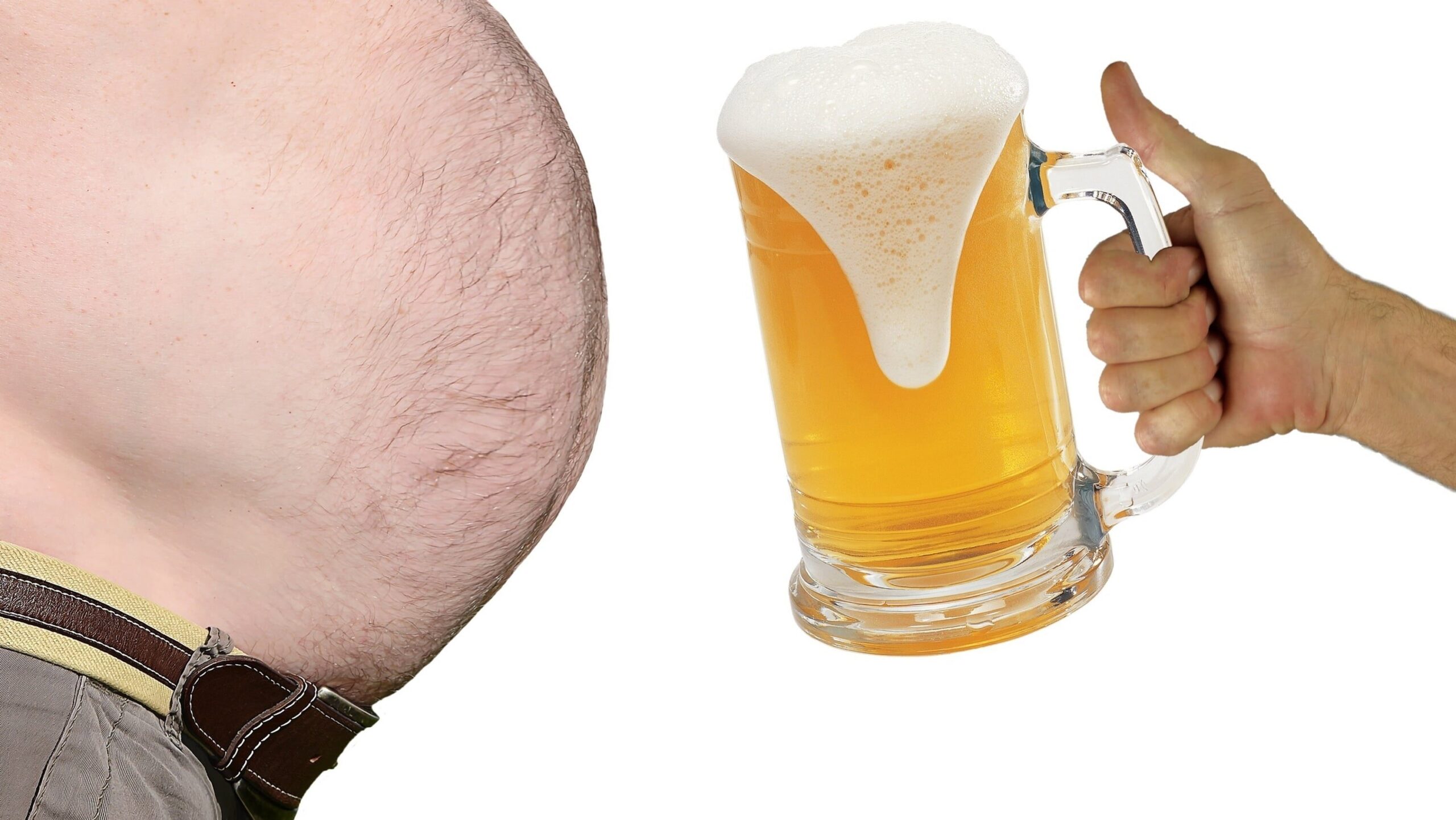
That combination, quick absorption, strong insulin spike, zero nutritional offset, is part of why these drinks are tied specifically to fat storage. Researchers tracking adults over several years found that people who drank more beer tended to carry more visceral fat, the kind around your organs, most closely linked to insulin resistance and heart risk, traced back to effects on blood fats and insulin sensitivity rather than calories alone. That’s the mechanism behind a “beer belly,” and the same insulin pathway is part of why sugary sodas carry a similar cost.
None of this means one soda or one beer undoes your day. It means these drinks don’t count toward how hydrated you are, even though they’re liquid, the metabolic cost attached is large enough to treat them as separate from water, not a stand-in for it.
But here’s an uncomfortable question. If dehydration alone can do this to your blood, what happens when it’s not the only thing working against the same system?
Why This Doesn’t Stay an Isolated Problem
The reason hydration keeps getting overlooked isn’t that people don’t know water matters. It’s that the symptoms of mild dehydration don’t look like thirst, they look like a headache, flat concentration, or an irritable mid-morning, and those get attributed to sleep, stress, screens, or just one of those weeks. “Maybe just drink some water” doesn’t feel like a substantial enough explanation, so it gets skipped.
There’s also a reason it doesn’t stay an isolated problem. Dehydration thickens your blood through one door. Carrying extra weight pushes on the same system through another: researchers tracking a large group of adults found that excess weight is associated with roughly double the risk of a clot forming in the blood. That’s a different specific risk than the stroke connection we just covered, but it points at the same underlying tendency, blood that’s more prone to clotting in general. Chronic stress adds a third door. Researchers following adults under sustained psychological stress found measurable damage to the lining of their blood vessels, the same lining that, when healthy, keeps blood flowing smoothly and keeps clots from forming where they shouldn’t. And separate research on stress’s effect on the blood itself found it actually gets thicker and more prone to clotting too, through the same fight-or-flight chemistry that’s useful in short bursts and corrosive when it never switches off.
So if someone is dehydrated, carrying extra weight, and running on chronic stress, that’s not three small, separate problems sitting side by side. It’s one vascular pathway, thicker blood and damaged vessel walls, being leaned on from three directions at once. Hydration happens to be the one of the three you can actually do something about today.
This connects to the rest of the series too. The sleep disruption affects how well your body regulates fluid overnight, that’s the vasopressin timing we just covered. Blood sugar instability from ultra-processed food produces fatigue signals that are genuinely hard to tell apart from mild dehydration. And under sustained stress, the body’s quieter background signals, thirst included, are the first things to fall out of awareness. None of these work in isolation. They compound, which is also why fixing one tends to make the others easier to spot.
So, how do we work with this, instead of against it?
What Actually Helps
Let’s take it step by step, because there’s one shift here that does most of the work, plus one experiment worth trying tomorrow.
The shift: water within minutes of waking. This is the habit that matters most. It closes the overnight gap before anything else, coffee, breakfast, the first scroll through your phone, competes for your attention. A full glass takes thirty seconds. Keep one by the bed if that helps you actually do it. If there’s an older adult in your life, this one’s worth mentioning to them specifically, since their thirst signal won’t prompt them the way yours does, the habit has to come from somewhere else.
The experiment: put a 1.5-litre bottle on your desk. This is Joel’s move. You’re not drinking straight from it, you’re refilling your mug or glass from it through the day, and noticing how much is left when you leave. An empty bottle means you’re on track. Still more than half full at 5pm tells you something you didn’t know before. No app, no logging. Just honest feedback from a physical object sitting in your eyeline.
If you want a number to aim for: the European Food Safety Authority puts the target at roughly 2.5 litres total per day for men and 2 litres for women, including food, which works out to about 2 litres from drinks alone for men and 1.6 litres for women, under normal conditions. Body size, heat, and activity shift that number, but it’s a useful anchor rather than a strict rule.
One note in the other direction, just so it’s said: drinking several litres rapidly in a short window can drop your blood sodium to dangerous levels. It’s rare, and it’s not something that happens from simply staying adequately hydrated through the day, the goal here is balance, not maximising.
That’s genuinely most of it. Delaying your coffee by about ninety minutes after waking helps too, for reasons we covered in a previous episode about your body’s natural alertness curve, but the water-first habit is the one doing the heavy lifting.
Where Joel Landed
Joel didn’t overhaul anything, water by the bed, a bottle on the desk instead of a guess. The mid-morning headache has become the exception rather than the rule. The afternoon fog lifts earlier when it comes at all.
If you recognise Joel in yourself, or in someone you know, especially someone older who might be running the same gap without realising it, that’s where to start.
If you’ve ever wondered why your discipline seems to disappear by mid-afternoon, why the craving for something sweet or processed shows up right when your willpower is lowest, that’s not a character flaw. There’s a specific brain chemical behind it, and we break down exactly what it’s doing in the next article.
This is Your Space Today – delivering the science-backed clarity you need every week because your health journey deserves expert guidance. If you found value in this article, I’d really appreciate it if you’d share it with friends or family who might be struggling with similar issues. Sometimes, understanding that we’re not alone in this struggle, and that there are real, science-based explanations for what we’re experiencing – that knowledge alone can be incredibly empowering.
This article is for educational purposes only and does not constitute medical advice, diagnosis, or treatment. Always consult with your healthcare provider regarding any health concerns. You can find detailed information here.
Thank you so much for spending this time with me today. Until next time, take care of yourself. You deserve it.
Scientific References
If you’d like to explore the research behind this article, here are selected peer-reviewed studies supporting the key points discussed:
- Austin, A. W., Patterson, S. M., & von Känel, R. (2013). Hemoconcentration and hemostasis during acute stress: Interacting and independent effects. Annals of Behavioral Medicine, 45(2), 201–218. https://pubmed.ncbi.nlm.nih.gov/21562905/
- European Food Safety Authority (EFSA) Panel on Dietetic Products, Nutrition, and Allergies (NDA). (2010). Scientific Opinion on Dietary Reference Values for water. EFSA Journal, 8(3), 1459. https://doi.org/10.2903/j.efsa.2010.1459
- Hamrick, I., Tuan, W.-J., Harker, P., Adogwa, O., & Hyacinth, H. I. (2025). Association between dehydration and stroke, a retrospective cohort study of a large database. Journal of Stroke and Cerebrovascular Diseases, 34(11), 108430. https://doi.org/10.1016/j.jstrokecerebrovasdis.2025.108430
- Hu, F. B., & Malik, V. S. (2010). Sugar-sweetened beverages and risk of obesity and type 2 diabetes: Epidemiologic evidence. Physiology & Behavior, 100(1), 47–54. https://doi.org/10.1016/j.physbeh.2010.01.036 Review noting that rapid absorption of liquid sugars contributes to measurable spikes in blood glucose and insulin.
- Kershaw, K. N., Lane-Cordova, A. D., Carnethon M. R., Tindle A. H., Liu K. (2017). Chronic stress and endothelial dysfunction: The Multi-Ethnic Study of Atherosclerosis (MESA). American Journal of Hypertension, 30(1), 75–80. https://doi.org/10.1093/ajh/hpw103
- Killer, S. C., Blannin, A. K., & Jeukendrup, A. E. (2014). No evidence of dehydration with moderate daily coffee intake: A counterbalanced cross-over study in a free-living population. PLOS ONE, 9(1), e84154. https://doi.org/10.1371/journal.pone.0084154
- Larsen, S. C., Klinedinst, B. S., Le, S. T., Pappas, C., Wolf, T., Meier, N. F., Lim, Y.-L., & Willette, A. A. (2022). Beer, wine, and spirits differentially influence body composition in older white adults -a United Kingdom Biobank study. Obesity Science & Practice, 8(5), 641–656. https://doi.org/10.1002/osp4.598
- McKinley, M. J., & Johnson, A. K. (2004). The physiological regulation of thirst and fluid intake. News in Physiological Sciences, 19(1), 1–6. https://doi.org/10.1152/nips.01470.2003
- Riebl, S. K., & Davy, B. M. (2013). The hydration equation: Update on water balance and cognitive performance. ACSM’s Health and Fitness Journal, 17(6), 21–28. https://pmc.ncbi.nlm.nih.gov/articles/PMC4207053/
- Rosinger, A. Y., Chang, A.-M., Buxton, O. M., Li, J., Wu, S., & Gao, X. (2019). Short sleep duration is associated with inadequate hydration: Cross-cultural evidence from US and Chinese adults. Sleep, 42(2), zsy210. https://doi.org/10.1093/sleep/zsy210
- Trudel, E., & Bourque, C. W. (2010). Central clock excites vasopressin neurons by waking osmosensory afferents during late sleep. Nature Neuroscience, 13(4), 467–474. https://doi.org/10.1038/nn.2503
- Verbalis, J. G., Goldsmith, S. R., Greenberg, A., Schrier, R. W., & Sterns, R. H. (2007). Hyponatremia treatment guidelines 2007: Expert panel recommendations. American Journal of Medicine, 120(11 Suppl 1), S1–S21. https://doi.org/10.1016/j.amjmed.2007.09.001
- Watso, J. C., & Farquhar, W. B. (2019). Hydration status and cardiovascular function. Nutrients, 11(8), 1866. https://doi.org/10.3390/nu11081866
- Yang, G., De Staercke, C., & Hooper, W. C. (2012). The effects of obesity on venous thromboembolism: A review. Open Journal of Preventive Medicine, 2(4), 499–509. https://doi.org/10.4236/ojpm.2012.24069