

Most people who dread Sunday evenings don’t think of themselves as anxious. The weekend was fine. Nothing went wrong. And yet, by late afternoon, something shifts – a low-level unease that settles in without invitation and doesn’t lift until Monday is well underway.
If that sounds familiar, you’re not imagining it. And it’s not a character flaw. It has a biological explanation – and, once you understand it, a practical way through.
Meet James
James is 46, a secondary school headteacher, and by most measures someone who has learned to manage the pressures of a demanding job. He doesn’t ruminate excessively. He leaves work at work. Weekends are genuinely his: Saturday sport, Sunday with his family, no laptop in sight.
But by Sunday evening, something changes. He becomes harder to be around – short-tempered in a way that surprises even him. He can’t quite settle. And when he finally gets into bed, his mind moves through the week ahead: the staff meeting, the parent conversation he needs to have, the thing from Thursday he should have handled differently.
He doesn’t experience this as anxiety. He experiences it as Sunday.
What James doesn’t know is that what he’s feeling has a name, a mechanism, and a practical remedy – and none of it begins in his mind.
What Is Actually Happening
Your body produces a hormone called cortisol – commonly called the stress hormone, though a more accurate description is the readiness hormone. It’s what your system produces when it’s preparing you for anything that demands performance: alertness, decision-making, social engagement.
Every morning, within thirty to forty-five minutes of waking, cortisol levels spike. Researchers call this the cortisol awakening response – the body’s start-up sequence, ramping up biological resources before the day begins. The timing and magnitude of this surge are shaped not only by the clock but also by psychological context: what the day ahead holds, and what the body has learned to anticipate.
Your body, through years of pattern recognition, has learned what Monday means. And research tracking cortisol levels across the working week has found that people in high-demand jobs show a significantly larger cortisol awakening response on weekday mornings than on weekends. In those with the highest levels of chronic work pressure, the difference is most pronounced. Studies of anticipatory cognition and the cortisol awakening response suggest the body begins this preparation before Monday arrives – though direct measurement of Sunday-evening cortisol remains an area for further research.
There is a second dimension that receives almost no attention in popular discussions of work stress. One of the most consistently potent triggers for a cortisol response isn’t physical danger – it’s the anticipation of social evaluation. Being assessed. Being watched. Walking into a room where people form opinions of you.
Research into psychological stress has established that the tasks most likely to produce a significant cortisol response are those combining uncontrollable outcomes with the possibility of being negatively judged. This finding – confirmed across laboratory studies using standardised social stress protocols – helps explain why visibility and accountability are so physiologically demanding. Evolutionary accounts of this sensitivity suggest that social standing had survival-level consequences for most of human prehistory, though this remains a theoretical interpretation rather than a directly measured claim.
For anyone in a visible, high-accountability role, Monday is an extended social evaluation event. James walks into a school where eighty staff members observe and appraise him every day. His body has been tracking this for years.
So what we have, on a typical Sunday evening, is a biological system doing exactly what it was designed to do: mobilising resources for anticipated cognitive and social demands. It isn’t anxiety. It’s preparation.
Why the Usual Strategies Don’t Work
The two most common responses to Sunday evening dread pull in opposite directions – and both fail in the same way.
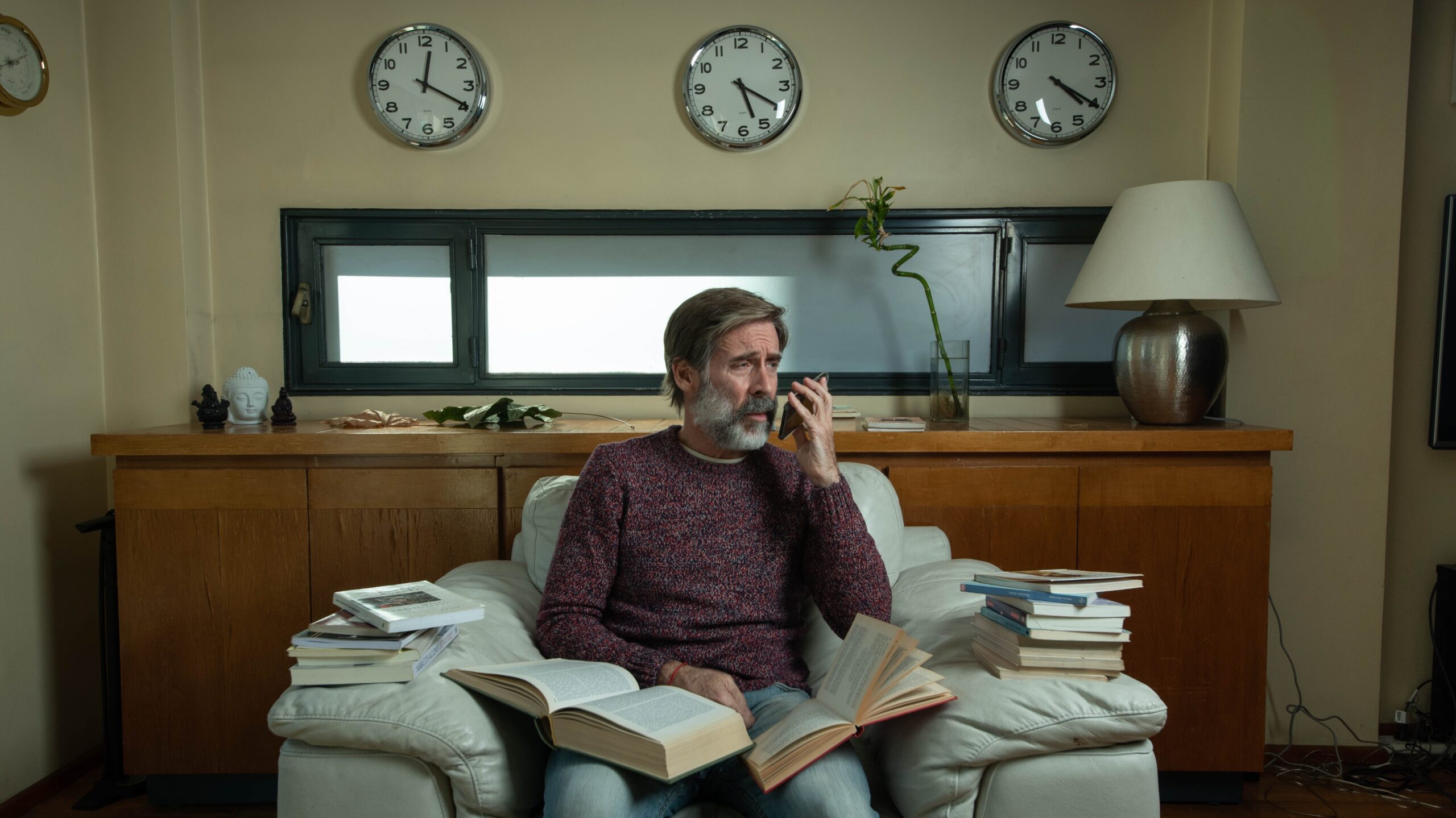
Some people lean in. They check email, plan the week, make lists. This feels productive. But research into how the brain processes anticipated threats has established that mentally re-engaging with an upcoming stressor – particularly when it shades into rumination or worry – keeps the stress response activated. The body does not readily distinguish between worrying about Monday and experiencing Monday, so cognitive re-engagement extends Sunday into Monday hormonally, without gaining anything useful.
Others escape: television, scrolling, a drink to take the edge off. Also understandable. Also ineffective – because these strategies suppress the discomfort without discharging the underlying chemistry. The cortisol stays elevated. The unease quiets temporarily. And then returns when the screen goes off.
Research going back to psychologist James Pennebaker’s early immune function studies points to a third approach: actively processing the experience rather than engaging with it or avoiding it. People who confronted and expressed difficult experiences – even briefly, even in writing – showed measurable physiological benefits compared to those who suppressed them. Acknowledging what you’re carrying, it turns out, is physiologically different from worrying about it.
Understanding the Full Picture – The Four Pillars
A note on the Four Pillars: this framework is my own way of organising what the research shows about how the body works as a connected system. It is not an official medical classification. I use it as an educational tool to make these connections easier to see.
When Sunday evening dread becomes a weekly pattern, it rarely operates in isolation. The biology touches every area of health – and the way those areas interact is where the real story lives.
Fuel – How anticipatory stress affects what and how you eat
Elevated cortisol changes appetite in ways that aren’t random. It tends to increase cravings for energy-dense foods – carbohydrate-heavy, high-fat – as part of the body’s preparation for a perceived demand. On a Sunday when someone is already in a low-level stress state, this can produce a kind of mindless eating that doesn’t register as hunger but functions as self-regulation.
Over time, if the weekly cortisol pattern remains unaddressed, chronic low-grade elevation is associated with changes in blood sugar regulation and metabolic health. Research has also linked the sleep disruption that often accompanies weekly stress cycles – including the social jetlag that comes from shifting sleep patterns at weekends – to metabolic consequences including weight gain. The occasional Sunday evening reach for comfort food is physiologically understandable; as a fixed weekly pattern driven by an unaddressed stress response, it gradually adds metabolic load that compounds with other consequences of the same stress cycle.
There is also a gut connection worth noting. The gut and brain communicate constantly through the vagus nerve, and chronic stress is associated with disruption to digestive function through this pathway. Digestive complaints that seem unrelated to Sunday evenings may, in part, be downstream of this weekly cortisol rhythm.
Movement – Why a sedentary Sunday makes everything worse
One of the body’s most effective mechanisms for regulating stress chemistry is physical movement. Research has found that physical activity moderates the effects of stress-related rumination on cortisol reactivity – meaning that the walk you don’t take on Sunday is not a neutral omission. Even moderate aerobic activity raises the heart rate enough to help the body process and regulate elevated cortisol more effectively than rest alone. The dose required is genuinely accessible; it doesn’t need to be earned with effort.
The irony of a sedentary Sunday is that it removes the one thing most likely to help. A restful day spent largely sitting feels like recovery. Physiologically, it leaves the accumulated stress chemistry from the week sitting in the system with nowhere to go. By Sunday evening, the body is simultaneously primed for Monday and unequipped to discharge the state it’s already in.
If this pattern repeats weekly, the body progressively spends less time in the lower-arousal states associated with genuine restoration. Muscle tension that doesn’t get walked off accumulates. Energy that doesn’t get used consolidates into a kind of restless physical unease that people often mistake for anxiety – when it is, in fact, inactivity.
Mind – The social dimension of Sunday dread
The anticipatory stress of Sunday evenings is fundamentally a social phenomenon. It isn’t the volume of work that drives the cortisol response – it’s the prospect of being evaluated, assessed, and watched. For anyone in a role where their performance is visible to others, the week ahead is a sustained social encounter.

What this means is that the nervous system’s capacity for safety and connection is the most direct counterweight to the Sunday threat-readiness state. Research on the nervous system’s social engagement functions suggests that low-stakes social interaction – the kind where no one is evaluating your performance – can help shift the body away from threat-readiness and toward a calmer, more restorative state.
This is the opposite of the kind of social engagement Monday represents. A conversation with a partner about something ordinary, ten minutes on the phone with a friend – these activate connection without evaluation. For a social species, connection is one of the body’s primary signals that the environment is safe.
Left unaddressed, the weekly pattern of social-threat arousal can gradually narrow a person’s sense of ease in other relationships. When the nervous system is regularly primed for evaluation, it can become harder to switch off that sensitivity in contexts where it isn’t warranted. The short-temperedness James notices on Sunday evenings is part of this – he’s biologically prepared for a social challenge that hasn’t started yet.
Rhythm – Sleep timing and the Sunday cortisol peak
This is where the chain reaction becomes most concrete. Most people treat the weekend as an opportunity to shift their sleep schedule – later nights, later mornings. It feels like earned recovery. What it actually creates is a condition researchers have called social jetlag: the mismatch between the body’s internal clock and its social schedule.
When sleep and wake times shift significantly on weekends, the cortisol rhythm shifts with them. Research links consistent sleep timing across all seven days – not just weekdays – with better sleep quality, lower fatigue at the start of the working week, and more stable mood. This association comes from observational studies rather than intervention trials, so it is more accurate to say that irregular sleep patterns are linked to poorer outcomes than to claim that fixing the schedule directly causes improvement. That said, the body of evidence pointing in this direction is consistent.
Alcohol compounds this. It reduces the proportion of deep, restorative sleep – disrupting sleep architecture in ways that are well established in the research literature. A drink to take the edge off Sunday evening may quiet the discomfort momentarily while quietly worsening the quality of the sleep that follows.
These pillars don’t operate independently. The sleep disruption affects appetite and food choices. The food choices affect how the brain handles anticipatory stress. The unaddressed stress affects whether sleep arrives. And underneath all of it, the sedentary day means none of those systems get properly reset. The pattern feeds itself – which is why single-point interventions often produce modest results.
The Sunday Anchor
The shift that works isn’t about managing the dread when it arrives. It’s about giving the body’s stress chemistry somewhere to go before it peaks. Each of the three steps below draws on a distinct body of research; they have not been tested as a combined protocol in a clinical trial, but together they address the principal mechanisms described above.
A short walk. Not a workout. A fifteen-to-twenty-minute walk at a pace that raises the heart rate slightly. Research on physical activity and stress reactivity shows that even moderate movement moderates the effects of rumination on cortisol, and that the anxiolytic effects of exercise are achievable at low doses. This is enough to help the body process and regulate elevated cortisol more effectively than rest alone.

A low-stakes social interaction. A conversation with your partner about something ordinary. Ten minutes on the phone with a friend. Something that activates connection and signals safety – not the evaluated, high-stakes social engagement of work, but the kind where no one is assessing your performance. Research on the nervous system’s social engagement functions suggests this kind of interaction helps shift the body away from threat-readiness.
The same bedtime as a weekday. This is the one that feels most counterintuitive. Maintaining roughly consistent sleep timing across the week – rather than shifting it on weekends – is associated with better sleep quality and lower early-week fatigue. The research on social jetlag is clear on this connection, even if it does not yet prove causation definitively.
James started with just the walk. Within a couple of weeks, Sunday evenings felt marginally less charged. He added the consistent bedtime. Within a month, he described Monday morning as feeling less like an ambush.
His Sunday hadn’t changed. His body’s relationship to it had.
If you recognise James’s Sunday evenings in your own, the Sunday Anchor is a reasonable place to start. None of these steps feel dramatic in the moment – which is also what makes them easy to underestimate. The biology, once understood, makes the logic plain: the body is preparing for something. Give it a way to do that which doesn’t tip you further into the state you’re trying to avoid.
This article is for educational purposes only. It does not constitute medical advice, diagnosis, or treatment. Always consult your healthcare provider regarding any health concerns.
Scientific References
The following peer-reviewed sources underpin the key claims in this article. Where a source was added to address a specific gap identified in editorial review, this is noted.
- Brosschot, J. F., Gerin, W., & Thayer, J. F. (2006). The perseverative cognition hypothesis: A review of worry, prolonged stress-related physiological activation, and health. Journal of Psychosomatic Research, 60(2), 113–124. https://pubmed.ncbi.nlm.nih.gov/16439263/
- Clow, A., Thorn, L., Evans, P., & Hucklebridge, F. (2004). The awakening cortisol response: Methodological issues and significance. Stress, 7(1), 29–37. https://doi.org/10.1080/10253890410001667205
- Dickerson, S. S., & Kemeny, M. E. (2004). Acute stressors and cortisol responses: A theoretical integration and synthesis of laboratory research. Psychological Bulletin, 130(3), 355–391. https://pubmed.ncbi.nlm.nih.gov/15122924/
- Erickson, K. I., Miller, D. L., & Roecklein, K. A. (2012). The aging hippocampus: Interactions between exercise, depression, and BDNF. The Neuroscientist, 18(1), 82–97. https://doi.org/10.1177/1073858410397054
- Fries, E., Dettenborn, L., & Kirschbaum, C. (2009). The cortisol awakening response (CAR): Facts and future directions. International Journal of Psychophysiology, 72(1), 67–73. https://doi.org/10.1016/j.ijpsycho.2008.03.014
- Kirschbaum, C., Pirke, K. M., & Hellhammer, D. H. (1993). The ‘Trier Social Stress Test’ – a tool for investigating psychobiological stress responses in a laboratory setting. Neuropsychobiology, 28(1–2), 76–81. https://doi.org/10.1159/000119004
- Pennebaker, J. W., Kiecolt-Glaser, J. K., & Glaser, R. (1988). Disclosure of traumas and immune function: Health implications for psychotherapy. Journal of Consulting and Clinical Psychology, 56(2), 239–245. https://psycnet.apa.org/doiLanding?doi=10.1037%2F0022-006X.56.2.239
- Porges, S. W. (2022). Polyvagal theory: A science of safety. Frontiers in Integrative Neuroscience, 16, 871227. https://pubmed.ncbi.nlm.nih.gov/35645742/
- Puterman, E., O’Donovan, A., Adler, N. E., Tomiyama, A. J., Kemeny, M., Wolkowitz, O. M., & Epel, E. (2011). Physical activity moderates effects of stressor – induced rumination on cortisol reactivity. Psychosomatic Medicine, 73(7), 604–611. https://doi.org/10.1097/PSY.0b013e318229e1e0
- Roehrs, T., & Roth, T. (2001). Sleep, sleepiness, and alcohol use. Alcohol Research & Health, 25(2), 101–109. https://pubmed.ncbi.nlm.nih.gov/11584549/
- Roenneberg, T., Allebrandt, K. V., Merrow, M., & Vetter, C. (2012). Social jetlag and obesity. Current Biology, 22(10), 939–943. https://doi.org/10.1016/j.cub.2012.03.038
- Schlotz, W., Hellhammer, J., Schulz, P., & Stone, A. A. (2004). Perceived work overload and chronic worrying predict weekend – weekday differences in the cortisol awakening response. Psychosomatic Medicine, 66(2), 207–214. https://pubmed.ncbi.nlm.nih.gov/15039505/
- Wipfli, B. M., Rethorst, C. D., & Landers, D. M. (2008). The anxiolytic effects of exercise: A meta-analysis of randomized trials and dose – response analysis. Journal of Sport and Exercise Psychology, 30(4), 392–410. https://pubmed.ncbi.nlm.nih.gov/18723899/
- Wittmann, M., Dinich, J., Merrow, M., & Roenneberg, T. (2006). Social jetlag: Misalignment of biological and social time. Chronobiology International, 23(1–2), 497–509. https://pubmed.ncbi.nlm.nih.gov/16687322/
- Wüst, S., Wolf, J., Hellhammer, D. H., Federenko, I., Schommer, N., & Kirschbaum, C. (2000). The cortisol awakening response – normal values and confounds. Noise and Health, 2(7), 79–88. https://pubmed.ncbi.nlm.nih.gov/12689474/