

It is 2:30 in the afternoon. Your brain feels strangely exhausted – not physically tired, just mentally drained. The strange part? Your day has not even been that demanding.
Then your phone buzzes. A news alert. You tap it – just for a second. One headline becomes another. Then another. Twenty minutes later you look up and something feels different. Your shoulders are tight. Your mind is racing. And the focus you had a moment ago is gone.
Here is the unsettling question: what if the thing draining your mental energy today was not work at all? What if it was the news?
Modern neuroscience suggests that negative news does not just inform your brain – it activates it like a threat signal. And when that happens repeatedly throughout the day, your nervous system quietly begins behaving as if the world around you is constantly on fire.
This article explores the hidden biology behind something millions of people experience but rarely understand: why reading the news can leave your brain feeling completely exhausted.
Your Brain’s Security Guard
Most people assume the problem with news is time. They think the issue is simply spending too many minutes scrolling. But the real issue is not the time – it is what the news does to your nervous system.
To understand why the news can be so draining, we need to look at a small structure deep inside the brain called the amygdala. Think of the amygdala as your brain’s security guard. Its job is simple: scan the environment, detect threats, and trigger the alarm if something looks dangerous.
When the amygdala senses danger, your body reacts instantly. Your heart rate increases. Your muscles tense. Your attention narrows. This system evolved to keep our ancestors alive – if a predator appeared in the bushes, hesitation could be fatal. So the brain became extremely good at detecting danger signals.
Your brain’s threat detection system cannot reliably distinguish between a physical threat in front of you and a threatening headline on a screen.
A story about violence in another city can activate many of the same neural pathways as a real danger nearby. Your brain does not fully understand that the threat is distant and abstract. It only understands the signal.
Why Negative Information Pulls Harder
This connects to something psychologists call negativity bias. Human brains naturally pay more attention to negative information than positive information – not because we are pessimistic, but because survival depended on noticing danger quickly. Missing good news had little cost. Missing danger could be fatal. So the brain prioritises negative signals.
Modern news environments are full of exactly those signals: conflict, disaster, urgent alerts, crisis. Each headline taps into the same biological lever – attention through threat detection.
Which means something interesting happens when you read a stream of negative news. Your brain keeps activating the same stress system again and again. And that system uses a lot of energy.
Research snapshot: A classic experiment found that after watching just fourteen minutes of negative news, participants rated their personal worries as more severe and less solvable. Nothing in their lives had changed – but their interpretation of their lives had.
What Negative News Does to Your Nervous System
A study from the University of Montreal examined how people respond physiologically after reading negative news stories. Researchers expected cortisol – the body’s primary stress hormone – to spike immediately. But that is not exactly what happened.
In many participants, cortisol did not rise right away. Instead, something more subtle occurred: their nervous systems became more reactive to future stress. Later challenges triggered stronger responses than usual. A frustrating email. A disagreement. A moment of uncertainty. All of these produced bigger stress reactions.
It was as if the news had turned the nervous system into a hair trigger. This means negative news may not always feel intensely stressful in the moment – but it lowers the threshold at which everyday challenges start feeling overwhelming.
Problematic News Consumption
Another large study looked at something researchers call problematic news consumption – a pattern where people feel compelled to constantly check news updates throughout the day. The researchers found that roughly one in six adults fall into this category. These individuals reported significantly higher levels of anxiety, fatigue, difficulty concentrating, and even physical symptoms such as headaches and digestive problems.
The Doomscrolling Loop
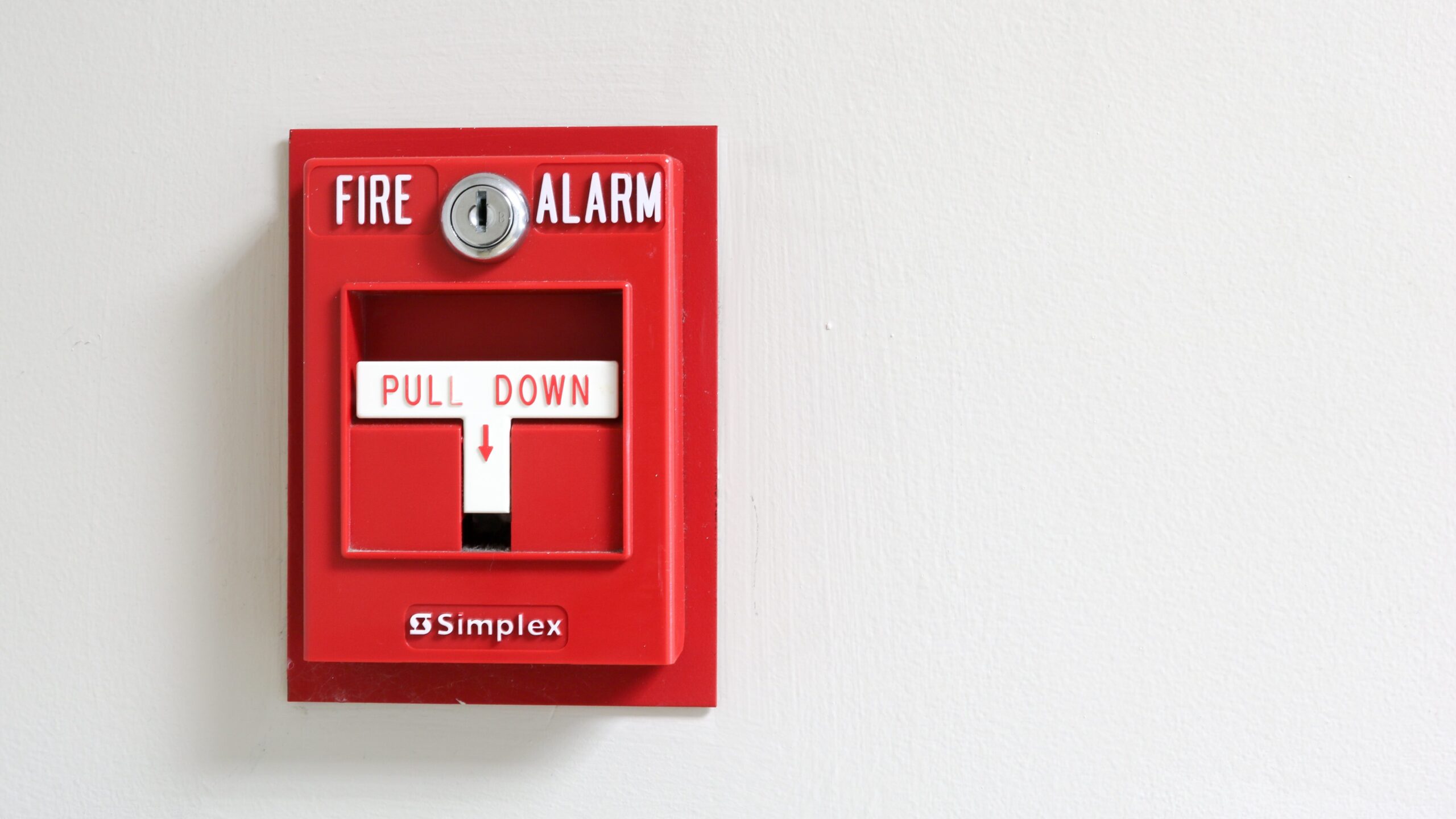
But the most fascinating finding may come from studies examining media exposure after traumatic events. Researchers discovered a self-reinforcing loop: people distressed by news coverage tended to seek more news – and the more they consumed, the more distressed they became.
The brain is searching for resolution. It wants to understand the threat. But modern news feeds rarely provide closure. There is always another story. Another alert. Another crisis. So the brain continues searching for answers that never quite arrive.
This creates the behaviour many people recognise as doomscrolling – scrolling through alarming news even when it makes us feel worse.
Mean World Syndrome
If negative news repeatedly activates our threat system, what happens when we expose ourselves to that environment every single day? The answer reveals something psychologists call Mean World Syndrome – and it can quietly reshape how we perceive reality.
Communication researcher George Gerbner coined the term after decades studying media exposure. He noticed a pattern: people who consume large amounts of news begin to overestimate danger in the world. They believe crime is more common than it is. They perceive society as more hostile. The world starts to feel more threatening than statistics actually support.
This happens because news is not a representative sample of reality. News focuses on exceptions – the dramatic, the dangerous, the unusual. But when we see these stories repeatedly, the brain begins treating them as normal patterns. And that shift in perception changes how we experience daily life.
How News Stress Spreads Through Your Energy
The stress response triggered by negative news does not stay in one part of your life. It spreads through four systems that regulate human energy: Fuel, Movement, Mind, and Rhythm.
Fuel
Stress hormones like cortisol can increase cravings for high-calorie foods and destabilise blood sugar. Many people reach for snacks or sugar after stressful news – not out of hunger, but as a way to soothe the nervous system.
Movement
The threat response produces muscle tension – tight shoulders, a clenched jaw, shallow breathing. Because news consumption usually happens while sitting still, that tension never releases through physical movement. Over time it accumulates as fatigue and discomfort.
Mind
When the brain stays in threat-detection mode, attention becomes biased toward danger. Neutral situations start feeling more negative. People may interpret uncertainty as risk. Cynicism and anxiety can slowly increase.
Rhythm
News alerts fragment attention throughout the day. Research shows it can take around twenty-three minutes to regain full focus after an interruption. Evening news consumption can also suppress melatonin production, delaying sleep and disrupting recovery.
So something that looks like a simple information habit can quietly reshape the architecture of your daily energy.
How to Stay Informed Without Exhausting Your Nervous System
The goal is not to avoid the news completely. The goal is to interact with it intentionally.

Create News Windows
One powerful change involves creating news windows. Instead of allowing alerts to interrupt the entire day, designate specific times to check the news. For many people, two short windows work well – one in the morning and one in the early evening.
Outside those windows, ask three simple questions before opening a story:
- Does this affect a decision I need to make today?
- Can I take meaningful action based on this information?
- Does this need my attention right now?
If the answer to all three is no – it can wait.
Choose Solutions-Focused News
Another helpful shift involves the type of news you consume. Researchers studying something called solutions journalism found that stories including responses and solutions produce a very different psychological effect. They still inform the audience about serious issues – but they also activate something important in the brain: a sense of agency, instead of helplessness.
The 60-Second Reset
If you notice yourself sliding into a doomscrolling spiral, try a simple 60-second reset. Put the phone down. Then slowly name:
- Three things you can see
- Two things you can hear
- One thing you can touch
This grounding exercise signals to your nervous system that the threat is not physically present. And that simple signal can interrupt the stress loop.
Working With Your Biology, Not Against It
If you have ever finished reading the news and felt strangely exhausted, now you understand why. Your brain was not being distracted – it was doing exactly what it was designed to do: protect you. The problem is that it is responding to a world that no longer exists. A world where every signal feels immediate, every threat feels personal, and every headline feels like something you need to act on.
But once you see that pattern, something shifts. Because you realise: you do not need to eliminate the news. You just need to change the way your brain experiences it. And that changes everything.
The effects of this constant low-level stress do not end when you put your phone down. They follow you – into your sleep, your focus, and your sense of self. Understanding the biology is the first step to reclaiming your energy.
Be a little more intentional with what you let into your mind. Because what you consume does not just shape your thoughts. It shapes your energy.
Your Future Self Is Waiting
Your future self – the one who wakes up refreshed, tackles challenges with clarity, and has energy left over for the people and activities you love – is waiting for you to take that first step.
Start now. Don’t wait for the perfect moment. Because let’s be honest, the perfect moment never comes. You have to create it.
Stop guessing, start knowing.
This is Your Space Today – delivering the science-backed clarity you need every week because your health journey deserves expert guidance.
If you found value in this article, I’d really appreciate it if you’d share it with friends or family who might be struggling with similar issues. Sometimes, understanding that we’re not alone in this struggle, and that there are real, science-based explanations for what we’re experiencing – that knowledge alone can be incredibly empowering.
This article is for educational purposes only and does not constitute medical advice, diagnosis, or treatment. Always consult with your healthcare provider regarding any health concerns. You can find detailed information here.
Thank you so much for spending this time with me today. Until next time, take care of yourself. You deserve it.
Scientific References
If you’d like to explore the research behind this article, here are selected peer-reviewed studies supporting the key points discussed
1. Baumeister, R. F., Bratslavsky, E., Finkenauer, C., & Vohs, K. D. (2001). Bad is stronger than good. Review of General Psychology, 5(4), 323–370. https://journals.sagepub.com/doi/10.1037/1089-2680.5.4.323
2. Johnston, W. M., & Davey, G. C. L. (1997). The psychological impact of negative TV news bulletins: The catastrophizing of personal worries. British Journal of Psychology, 88(1), 85–91. https://onlinelibrary.wiley.com/doi/abs/10.1111/j.2044-8295.1997.tb02622.x
3. Kelly, C.A., Sharot, T. Web-browsing patterns reflect and shape mood and mental health. Nat Hum Behav 9, 133–146 (2025). https://doi.org/10.1038/s41562-024-02065-6
4. Marin, M. F., Morin-Major, J. K., Schramek, T. E., Beaupré, A., Perna, A., et al. (2012). There is no news like bad news: Women are more remembering and stress reactive after reading real negative news than men. PLOS ONE, 7(10), e47189. https://doi.org/10.1371/journal.pone.0047189
5. McLaughlin, B., Gotlieb, M. R., & Mills, D. J. (2022). Caught in a dangerous world: Problematic news consumption and its relationship to mental and physical ill-being. Health Communication, 38(12), 2687–2697. https://www.tandfonline.com/doi/full/10.1080/10410236.2022.2106086
6. Thompson, R. R., Holman, E. A., & Silver, R. C. (2019). Media exposure to mass violence events can fuel a cycle of distress. Science Advances, 5(4), eaav3502. https://www.science.org/doi/10.1126/sciadv.aav3502
7. Ward, A. F., Duke, K., Gneezy, A., & Bos, M. W. (2017). Brain drain: The mere presence of one’s own smartphone reduces available cognitive capacity. Journal of the Association for Consumer Research, 2(2), 140–154. https://www.journals.uchicago.edu/doi/full/10.1086/691462