
If you’re finding this article by chance, know that it continues our previous piece about why traditional exercise approaches fail for sedentary adults. We strongly encourage you to complete the 14-day Movement Detective Challenge first – that foundation will strengthen your motivation and make building these new habits easier.
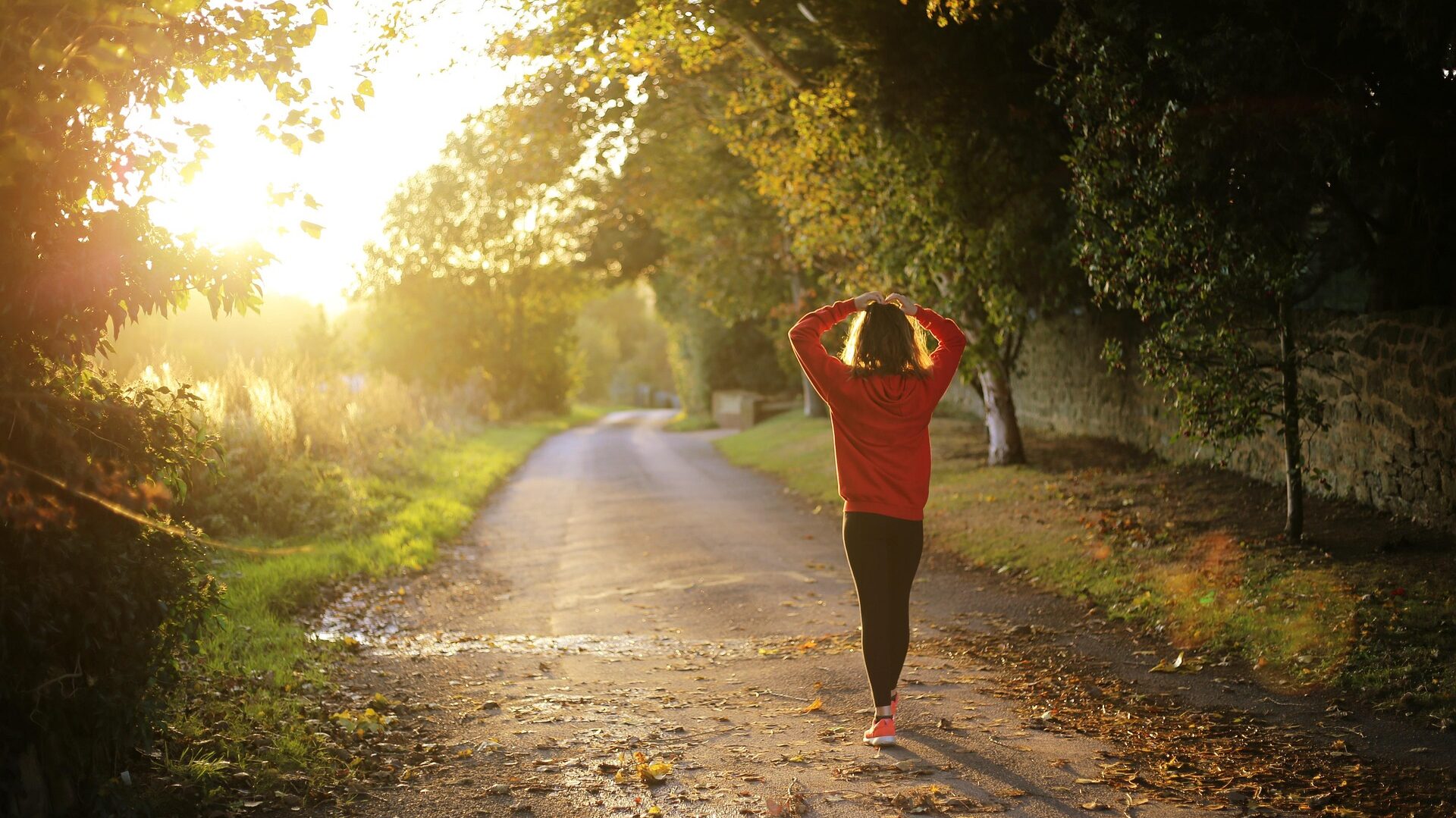
Remember Emma? The 34-year-old marketing professional who tried a “beginner” boot camp and ended up so sore she couldn’t move for three days? After three failed attempts, she canceled her gym membership and decided exercise “just wasn’t for her.”
But her story didn’t end there.
Six months later, Emma made a different decision. Not a promise to “get fit,” but something smaller: “I won’t let my first workout break me again.” She became an architect – someone who builds structures layer by layer, with materials that fit her actual foundation.
This article is the next chapter in that story. And before we begin: this is for educational purposes only. It does not constitute medical advice, diagnosis, or treatment. The movement progressions we describe are general guidelines and may not be appropriate for all individuals. Full disclaimer is at the end of the article.
Now. Let’s build.
The Zero-Point Reality
After her 14-day detective challenge, Emma had data instead of shame. Her patterns were stark: 9.5 hours of sitting daily, fewer than 3 movement breaks, zero stairs, chronic neck tension, evening sugar cravings, poor sleep.
These weren’t character flaws. They were biological realities – a body reorganized around stillness.
Her crucial insight? She wasn’t starting at “beginner level.” She was starting below zero – a place where even beginner classes would feel advanced.
Imagine a simple, informal fitness scale where zero represents basic functional capacity: climbing stairs without breathlessness, carrying groceries without strain. Most programs assume you start at zero. But if you’ve maintained a sitting-dominant lifestyle for months or years, you’re likely in “negative territory” on this scale.
How far below depends on how long you’ve been sedentary, your movement history, sleep quality, stress, nutrition, and age. Understanding your true starting point is the first step toward sustainable progress. Emma’s goal wasn’t to immediately reach zero – it was to systematically work up to where “beginner” classes would feel appropriate.
Think about it this way. If someone offered you any car you wanted, but you’d drive it for life – never getting another – would you maintain it regularly?
Your body is what it is. You’ll have it for the rest of your life. And here’s the thing: you don’t need a gym. You don’t need an hour. A few steps after waking. One flight of stairs. Arm movements at your desk. A short lunch walk. Some exercises while watching TV. That’s the foundation. The results might genuinely shock you.
Why This Three-Phase System Works
This is not a 30-day transformation. It’s not a fitness shortcut. It’s a gradual biological adaptation process.
Your body spent months or years adapting to stillness – shutting down mitochondria, downshifting cardiovascular function, atrophying muscles, disrupting circadian rhythms. You can’t reverse those adaptations with willpower. You need time, consistency, and progressive challenge at a level your biology can actually handle.
Behavioral research suggests that people who view their current limitations as understandable biological consequences – rather than personal failures – tend to build more sustainable exercise habits, partly because this perspective supports self-efficacy and reduces shame. Motivation burns out. Small, consistent actions support your body’s natural adaptive systems.
The principle is simple: build capacity first, then add intensity. Always.
The phases are strictly sequential, but the time you spend in each varies. Some people progress through Phase 1 in two weeks; others need two months. Both are normal. The mistake most people make is rushing – underestimating how deconditioned they are and jumping ahead too quickly. This leads to severe soreness, injury risk, and abandonment. The point isn’t sprinting through a program. It’s building habits that last years.
Each phase builds on the last. Be patient with the process.
The 20-Repetition Rule
Across all phases, one principle guides your progression: start each exercise intending to complete 20 repetitions.
If you notice strong burning or intense fatigue – especially if it feels sharper with each repetition – stop that exercise for the day. If you can only do 6-8 comfortable reps at first, that’s fine. Note your number and aim to add 1-2 more over time, always staying below the point of strong burning or joint pain.
Mild warmth or light fatigue is normal. Severe burning is your cue to back off. That early burn signals your energy systems are near capacity. Pushing through doesn’t build strength; it creates delayed onset muscle soreness – DOMS. And severe soreness after an over-ambitious start is the single most common reason people abandon exercise attempts.
When 20 reps feel comfortable with no burning, add a second set. Progress to 3×20 before moving to heavier resistance or the next phase. This gradual approach prevents the burnout that kills motivation.
Phase 1: Waking Up Your Joints
When to start: For most people, you can begin Phase 1 right now, at a very gentle level. If you have medical conditions, significant pain, or any safety concerns, speak with your healthcare provider first.
When to progress: When all Phase 1 movements feel comfortable at 3×20 for one full week, with no muscle burning or next-day soreness.
The Morning Ritual
For Emma, the first change wasn’t a gym session. It was what happened in the first 15 minutes after waking.
Sleep medicine research shows many adults wake with joint stiffness after hours of static positions. Emma’s body was essentially “gelled” after lying still for eight hours. So instead of reaching for her phone, she rolled into a joint warm-up ritual – a simple sequence that wakes the joints, activates the major muscle groups, and restores basic mobility.
The structure: gentle ankle and wrist circles, then hip circles and shoulder movements. Light spinal twists and neck mobility. Knee-to-chest pulls for the hip flexors. Soft leg extensions and arm sweeps to wake the limbs. And a brief posterior-chain activation – glute squeeze, light back engagement.
For the first three joint‑mobility movements, perform only one set of 20 repetitions and keep it there – no progression. For the next three movements, start with 20 repetitions if you can, and gradually build up to three sets of 20. Just 15 minutes. Every morning.
The Movement Laboratory
Emma worked in a standard office: desk, chair, elevator, fluorescent lights. Instead of seeing obstacles, she saw a movement laboratory.
Stairs became her first experiment. One flight up and down when arriving and leaving – even if she used the elevator for the remaining floors. She gradually added more over weeks.

Every hour, she reset. Twenty shoulder rolls. Twenty calf raises while standing. Or simply shifting from sitting to standing for a few minutes. That calf raise, by the way, isn’t arbitrary. It activates the calf muscle pump, which supports venous blood return from legs that tend to pool during prolonged sitting. Studies suggest this may help reduce venous thrombosis risk associated with stillness.
Without a standing desk, Emma used what she called “neutral spaces” – the kitchenette while waiting for tea, hallways between meetings, even the bathroom. Nobody needed to know she was doing toe raises while her water boiled.
The walking changes were just as subtle. Park in the farthest spot. Get off public transport one stop early. Take a 10-minute post-lunch walk, including one flight of stairs if possible. These sound trivial. But research shows brief bouts of light movement scattered through the day improve glucose and insulin responses more effectively than one longer session separated by prolonged sitting. Going from almost no activity to some activity yields disproportionately large benefits.
If You Work from Home
Research shows home-based work links to longer sitting and fewer movement breaks. Without a commute or office walking, daily activity drops significantly – which means the routine needs deliberate adjustment.
Two walks get added to the morning ritual. A morning walk of 15 minutes – to a bakery, around the block, or to the nearest green space. This isn’t just about movement. Morning light exposure regulates sleep-wake cycles and hormones like cortisol and melatonin. Without stepping outside until evening, your circadian clock drifts, and that means poor sleep, low energy, and difficulty concentrating.
An after-work walk of 15 minutes, as the sun sets. This supports the natural cortisol drop and prepares the body for evening relaxation. For remote workers, it replaces the commute – a deliberate boundary between work and home. Research shows those clear psychological boundaries reduce burnout and improve both mood and sleep quality.
During video-off calls, gentle movement becomes possible: marching in place, a wide stance with slow weight shifts, standing calf raises, shoulder rolls. These keep circulation active and prevent the muscular stiffness that builds up during long, motionless meetings.
One red flag to watch for: if a whole day passes without leaving the apartment, that’s a warning sign – for both physical and mental health.
For Older Adults
Retirement can be either the start of decline or the beginning of rebuilding. The structure here is simple but meaningful.
A fixed daily walk of 20 to 30 minutes, to any destination – a bakery, a library, a café. This creates routine, provides purpose, and offers social connection. Even brief exchanges – a conversation with a barista – matter for brain health and emotional well-being. Research shows both physical activity and social participation protect cognitive health and reduce dementia risk.
Once a week, a trip somewhere further: a more distant park or café, reached by public transport. Navigating new places engages motor and cognitive functions simultaneously. Research shows combining physical activity with cognitive demands – route planning, balance adjustments, spatial navigation – preserves brain function better than either alone.
Balance practice is the key: standing on one leg while holding a counter, progressing to unsupported holds. This isn’t vanity – it’s injury prevention. Hip fractures are particularly serious in older adults, with high mortality rates, major functional decline, and increased likelihood of long-term care placement. Many require surgery, and those with cognitive impairment or frailty have especially poor outcomes.
Regular walking, balance exercises, and leg strength work can help reduce fall and fracture risk by supporting muscle function, proprioception, and reaction capacity. For older adults, joint mobility, balance drills, and light resistance training can be key strategies for maintaining autonomy and reducing the risk of post-fall complications.
For Parents with Young Children
Parents face a different challenge here. Not finding motivation – finding time.
The morning routine stays, but on impossible mornings, strip it down. Twenty knee raises and 20 toe raises take under two minutes. They still provide essential circulation and joint activation.
If a nearby nursery or preschool exists, walk your child there – both ways if you can. This replaces incidental activity many parents lose during demanding early-childhood years. Drop off at a comfortable pace; return alone with a slightly faster, more intentional walk.
Family time becomes movement time. Start with simple playground warm-ups before you play: arm circles, knee raises, a few wall push-ups or easy squats (heels can rest on a small wedge if they lift). Then shift into play – kick a ball together, chase each other in short bursts, make it a game with quick races to a finish line running forward, sideways, or backward. Natural, fun, and surprisingly effective.
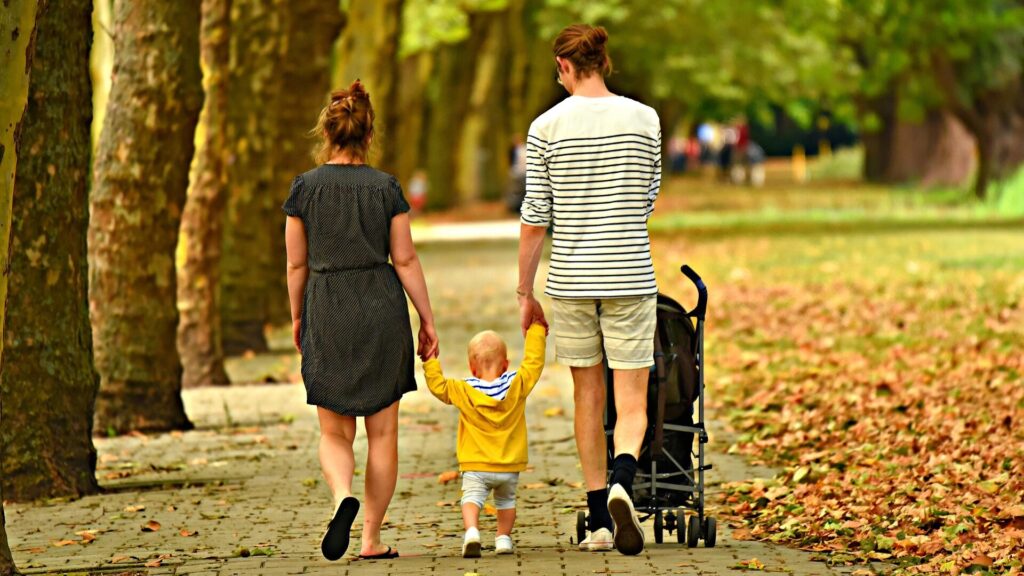
On weekends, 20-minute family walks structured as intervals: 5 minutes brisk (but comfortable enough to talk), 5 minutes easy, repeat. Research on interval walking shows significant benefits for cardiovascular health, metabolic function, and endurance.
Research suggests physical activity doesn’t just consume energy – it can improve perceived energy and reduce fatigue, especially at light to moderate intensities integrated into daily routines. For exhausted parents, the goal isn’t perfection. It’s a bias toward any extra movement that fits family life. Children learn from what they see. Active parents model movement as something normal and enjoyable – shaping healthier habits well into adolescence and adulthood.
Warning Signs
Stop immediately if you notice any of the following: a burning sensation that persists between repetitions; a heart rate that stays uncomfortably elevated for 2 or more minutes after stopping; sharp or persistent joint pain; or dizziness, lightheadedness, or nausea. If any of these happen, pause. We’ll talk more about when to seek professional support later in the article.
Phase 2: Building Capacity with Resistance
When to start: Only after completing Phase 1 comfortably for at least one full week.
When to progress: When upper-body exercises with 0.5 kg weights, lower-body exercises with 1 kg weights, hourly workplace exercises, and all twice-weekly training exercises feel comfortable at 3×20.
For this phase, you’ll need a little equipment: a set of three resistance bands (light, medium, heavy), and ankle weights starting at 0.25 kg and 0.5 kg. Adjustable weights are a practical option here – they let you change the load in small steps, from 0.25 kg up to 2 kg, keeping progression smooth and safe without needing multiple separate sets. Retirees will also benefit from a foam balance pad for stability training.
Why Strength Before Stretching?
Here’s something that genuinely surprises people. In Phase 2, we strengthen before we stretch – and most people’s instinct is the opposite.
We tend to think we should “stretch everything out” first. But for people who’ve spent years sitting, the problem is rarely just tightness. It’s also a loss of strength and reduced neuromuscular control.
Here’s what’s actually happening. Lack of movement, improper posture, and accumulated stress cause muscles to become stiff. But this stiffness isn’t random – it’s your body’s protective response. When muscles are weak and untrained, your body compensates by tightening them to stabilize joints.
Research shows chronic sitting creates these compensatory patterns throughout the musculoskeletal system. Weak muscles become chronically tense as the body attempts to maintain stability. If you aggressively stretch tight-but-weak muscles without building strength first, you may worsen the problem. The muscles can’t support normal loads, and pain often intensifies.
Your body tightens muscles to protect structures when it senses instability. Stretch without strengthening first, and you’re removing the protective mechanism without addressing the underlying weakness. Once you strengthen and train muscles properly, they can support your body through full ranges of motion – then stretching becomes safe and effective.
Studies show resistance training improves insulin sensitivity, muscle mass, and functional capacity. By building muscle first, joints gain better active support, the nervous system relearns coordinated movement patterns, and everyday tasks become easier – reinforcing motivation in a way that willpower alone never can.
Phase 2 in Practice
The morning routine extends to 20 minutes. You keep the Phase 1 joint mobility foundation, performing each joint movement only once for 20 repetitions. For the arm and leg exercises, you now add light weights: upper body 0.25 kg, lower body 0.5 kg. Start with 20 reps, progressing to 3×20 before increasing weight.
Walking extends to 20-30 minutes daily. Experimental studies show that breaking up prolonged sitting with short walking bouts improves post-meal glucose and insulin responses compared with uninterrupted sitting. Aim for three sessions of 7-10 minutes spread across the day – start shorter if needed, even 3-5 minutes counts. Use walks for phone calls, errands, mental breaks. The point isn’t intensity. It’s consistency.
Twice a week, a structured 40-minute session. This is where the real rebuilding happens. Glute bridges are the cornerstone, because prolonged sitting essentially “turns off” your glutes – a phenomenon researchers call gluteal amnesia. When they stop firing properly, your lower back, knees, and hips compensate, and that’s where the pain comes from. Alongside glute bridges: back and abdominal work with weights, wall push-ups, bird dog exercises, and leg work with resistance bands.
Office workers progress from one set of 20 hourly movements to two: one spine exercise and one leg exercise each hour. Remote workers can add light resistance or swap in band exercises – working from home offers the freedom to progress without self-consciousness.
On weekends, work toward a 40-minute hike on uneven terrain. If that’s too much at first, start with 10–15 minutes on flat ground and build from there. The other day, 30 minutes of interval walking.
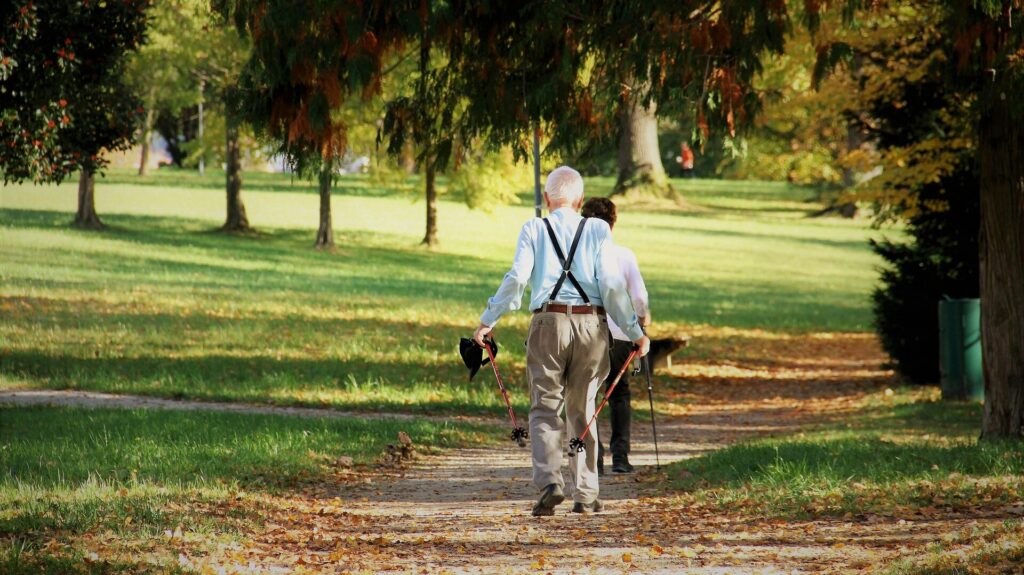
For retirees, start lighter: five controlled reps per exercise, increasing only when movement feels steady. Marching in place and standing balance on a foam pad next to the wall for support are good starting points. These exercises aren’t cosmetic – they directly reduce fall risk, maintain independence, and improve quality of life.
Phase 3: Integration and Functional Movement
When to start: Only after completing Phase 2 comfortably for at least one full week.
This is where Emma finally reached that zero point – the functional baseline where traditional beginner classes would actually feel appropriate. Movement stops being something she “did.” It became how she navigated her world.
Morning and Weekly Sessions
The morning routine stays at 20 minutes, but the weights increase slightly: 0.75 kg for arms, 1.5 kg for legs. Or add one more set of 20 – whichever feels right. Never progress to the point of struggle. Wall push-ups continue, with feet stepping gradually farther back as strength builds.
Twice a week, the structured session extends to 60 minutes. Previous exercises continue, with weight increasing for abs, back, and legs from 1 kg to 2 kg – up to a maximum of 5 kg. New exercises join the mix: chest lift with object pass, which strengthens the spinal erectors and upper back and prevents forward-hunched posture; and lunge variations with weights, which build single-leg strength, balance, and coordination for walking, stairs, and stepping over obstacles – the movements you do every day.
A Note for Women in Peri- and Postmenopause, and for Older Adults
For this group, Phase 3 carries extra significance. Strength training is one of the most effective non-pharmacological tools for protecting bone density. Regular resistance exercise provides mechanical loading that slows age-related bone loss and can even increase bone mineral density at key fracture sites such as the spine and hip.
High-intensity, well-supervised programs have been shown in studies to improve both bone density and physical function in postmenopausal women with osteopenia or osteoporosis, and may help reduce fall and fracture risk. In practice, this translates into better balance, stronger muscles around vulnerable joints, greater independence in daily life, and a lower likelihood of disabling fractures.
Active Living Integration
At this stage, movement stops being a scheduled activity and becomes how you move through the world. Take stairs two at a time when energy allows. Carry groceries in two smaller bags for natural resistance training. Stand and march during TV commercials or phone calls. Choose the farthest parking spot. Do calf raises while brushing your teeth or waiting for an elevator.
Classes, Cardio, and Yoga
At this point, you can sign up for beginner sports or fitness classes – if that appeals to you. If group classes aren’t your thing, maintain strength exercises twice weekly, plus two weekly cardio sessions built around 20-minute interval training: brisk walking, elliptical, treadmill, or rowing machine. Interval-based cardio is extensively studied and produces meaningful improvements in cardiovascular fitness, metabolic health, and cognitive function.
On days you attend a class, you can ease up on your usual walking. But on the remaining days, keep your regular movement habits. And don’t drop the resistance-band and weight work – that’s the backbone of your long-term strength and bone health.
One more addition at this stage: basic yoga stretches. Your muscles are now strong enough to support full ranges of motion safely. Long-term health depends on three components working together – muscle strength, tissue mobility through regular stretching, and respiratory endurance with interval-based cardio. All three, not one or two. A short block of strength work at least twice a week remains essential. Yoga joins it as a complement, not a replacement.
The Science Behind This Gentle Approach
A range of studies on exercise adherence and graded training suggests that when people start slowly and without pressure, they experience fewer setbacks and are far more likely to stick with activity long-term. People who follow this gentler pace tend to notice early improvements, feel less pain and stiffness, and are far more likely to keep moving over time. Those small, early wins build confidence and make movement feel doable – and sustainable.
When Professional Support Matters
Sometimes, independent training isn’t enough. Professional support becomes essential when you’re dealing with persistent joint or back pain, recurring injuries, limited mobility after surgery, balance problems, significant morning stiffness, or a long break from physical activity. In these cases, a medical evaluation or a consultation with a physiotherapist helps clarify what’s safe, what needs modification, and what to avoid entirely.
If any movement causes pain, pushing through it rarely leads to progress – it often makes things worse. Pain during exercise is a signal to pause and investigate, not to force your way forward. When discomfort appears, the first step is speaking with a doctor to understand the underlying cause. Physiotherapy may also be necessary to restore proper movement patterns and protect the joints.
For anyone new to resistance training, investing in a few sessions with a personal trainer – or asking a physiotherapist to check your technique – can be extremely valuable. It’s a short-term investment that prevents unnecessary injuries and accelerates your progress. With the right guidance, movement becomes safer, more efficient, and far more energizing.
Why the Exercise Table Works Better Than Instagram Videos
Many people notice something surprising when following online workout videos: instead of feeling motivated, they often feel worse.
Perfectly lit studios. Flawless bodies. Coordinated outfits. Instructors who look energized after exhausting sessions. Meanwhile, the average person is sweating and struggling in an old T-shirt in a cluttered living room – while the instructor chats effortlessly. That contrast alone can be deeply discouraging.
Research on “fitspiration” content shows appearance-focused fitness imagery often worsens body image, mood, and self-compassion – and can even reduce the intention to exercise. Studies consistently link appearance-driven motivation to lower adherence and more negative psychological effects compared to health- or mood-based motives.
It’s also worth remembering: many influencers film during their workday, in controlled studio settings. This is their job – not something squeezed in before a commute or after putting kids to bed. They have professional lighting, makeup, wardrobe, and often personal trainers. What you see is a polished performance, not everyday reality.
That’s why this article includes a downloadable exercise table with sets, repetitions, and short instructions – away from the pressure of perfect bodies and ideal settings. The table includes exercise names and categories, brief descriptions of proper form, progression guidelines (sets, reps, resistance), adaptations for different life situations, and space to track your progress. You can print it, save it on your phone, or keep it wherever it’s most convenient.
Your workout doesn’t need to look like a fitness commercial. It needs to fit your body, your life, and your real circumstances.
What Comes Next
By the end of these three phases – whether that takes you 12 weeks or 12 months – you’ll have rebuilt the fundamental movement capacity that makes traditional exercise actually accessible and enjoyable. You’ll have rediscovered that movement can be a source of energy, not exhaustion.

This isn’t the end of your movement journey. It’s the foundation that makes everything else possible.
Download Your Exercise Table
Detailed Exercise Progression Table – comming soon.
The table includes all exercises mentioned in this article with proper form cues, progression guidelines, and adaptation notes for different life situations. Print it, save it, use it – away from social media comparisons and performance pressure.
This Is Your Space Today
Thank you for spending this time here. If you found value in this article, please consider sharing it with friends or family who might be struggling with similar issues. Understanding that we are not alone in this struggle, and that there are real, science-based explanations for what we are experiencing, can be deeply empowering.
Until next time, take care of yourself. You deserve it.
Important Medical Disclaimer
This article is for educational purposes only and does not constitute medical advice, diagnosis, or treatment. It cannot assess your personal health risks or medical conditions.
Before beginning any new exercise program, especially if you have medical conditions, experience chest discomfort, severe shortness of breath, or dizziness during activity, have chronic pain or recent injuries, are pregnant or postpartum, take medications affecting heart rate or blood pressure, are over 40 and have been sedentary, or have any concerns about safely increasing physical activity, you must consult with your healthcare provider or physician.
The movement progressions described are general guidelines and may not be appropriate for all individuals. If you experience unusual pain, discomfort, or symptoms during or after exercise, stop immediately and seek medical advice.
Always listen to your body. The warning signs described in this article (burning sensation, elevated heart rate, sharp pain, dizziness) are serious and should never be ignored. When in doubt, reduce intensity, take extra rest, or consult a healthcare professional.
Scientific References
If you’d like to explore the research behind this article, here are selected peer-reviewed studies supporting the key points discussed:
- Arem, H., Moore, S. C., Patel, A., Hartge, P., Berrington de Gonzalez, A., Visvanathan, K., Campbell, P. T., Freedman, M., Weiderpass, E., Adami, H. O., Linet, M. S., Lee, I. M., & Matthews, C. E. Leisure time physical activity and mortality: A detailed pooled analysis of the dose-response relationship. JAMA Internal Medicine. 2015;175(6):959-967. https://pmc.ncbi.nlm.nih.gov/articles/PMC4451435/
- Ancoli-Israel, S., & Ayalon, L. Diagnosis and treatment of sleep disorders in older adults. American Journal of Geriatric Psychiatry. 2006;14(2):95-103. https://doi.org/10.1097/01.JGP.0000196627.12010.d1
- Andaloro, S., Cacciatore, S., Risoli, A., Comodo, R. M., Brancaccio, V., Calvani, R., Giusti, S., Schlögl, M., D’Angelo, E., Tosato, M., Landi, F., & Marzetti, E. Hip fracture as a systemic disease in older adults: A narrative review on multisystem implications and management. Medical Sciences (Basel). 2025;13(3):89. https://pmc.ncbi.nlm.nih.gov/articles/PMC12285999/
- Arigo, D., Brown, M. M., & DiBisceglie, S. Experimental effects of fitspiration messaging on body satisfaction, exercise motivation, and exercise behavior among college women and men. Translational Behavioral Medicine. 2021;11(7):1441-1450. https://pmc.ncbi.nlm.nih.gov/articles/PMC8320884/
- Berry, T. R., Locke, S., & Ori, E. M. Effects of fitspiration on believability and intention to exercise. Frontiers in Psychology. 2023;14:1094276. https://www.frontiersin.org/articles/10.3389/fpsyg.2023.1094276/full
- de Oliveira da Silva Scaranni, P., Griep, R. H., Pitanga, F. J. G., Barreto, S. M., Matos, S. M. A., & de Jesus Mendes da Fonseca, M. Work from home and the association with sedentary behaviors, leisure-time and domestic physical activity in the ELSA-Brasil study. BMC Public Health. 2023;23(1):305. https://www.ncbi.nlm.nih.gov/pmc/articles/PMC9912204/
- Dimet-Wiley, A., Golovko, G., & Watowich, S. J. One-year postfracture mortality rate in older adults with hip fractures relative to other lower extremity fractures: Retrospective cohort study. JMIR Aging. 2022;5(1):e32683. https://pubmed.ncbi.nlm.nih.gov/35293865/
- Dunstan, D. W., Kingwell, B. A., Larsen, R., Healy, G. N., Cerin, E., Hamilton, M. T., Shaw, J. E., Bertovic, D. A., Zimmet, P. Z., Salmon, J., & Owen, N. Breaking up prolonged sitting reduces postprandial glucose and insulin responses. Diabetes Care. 2012;35(5):976-983. https://doi.org/10.2337/dc11-1931
- Erickson, K. I., Voss, M. W., Prakash, R. S., Basak, C., Szabo, A., Chaddock, L., Kim, J. S., Heo, S., Alves, H., White, S. M., Wojcicki, T. R., Mailey, E., Vieira, V. J., Martin, S. A., Pence, B. D., Woods, J. A., McAuley, E., & Kramer, A. F. Exercise training increases size of hippocampus and improves memory. Proceedings of the National Academy of Sciences. 2011;108(7):3017-3022. https://doi.org/10.1073/pnas.1015950108
- Freeman, J. A., Gear, M., Pauli, A., Cowan, P., Finnigan, C., Hunter, H., Mobberley, C., Nock, A., Sims, R., & Thain, J. The effect of core stability training on balance and mobility in ambulant individuals with multiple sclerosis: A multi-centre series of single case studies. Multiple Sclerosis. 2010;16(11):1377-1384. https://doi.org/10.1177/1352458510378126
- Hamer, M., Muniz Terrera, G., & Demakakos, P. Physical activity and trajectories in cognitive function: English Longitudinal Study of Ageing. Journal of Epidemiology and Community Health. 2018;72(6):477-483. https://jech.bmj.com/content/72/6/477
- Hong, A. R., & Kim, S. W. Effects of resistance exercise on bone health. Endocrinology and Metabolism (Seoul). 2018;33(4):435-444. https://pmc.ncbi.nlm.nih.gov/articles/PMC6279907/
- Horak, F. B. Postural orientation and equilibrium: What do we need to know about neural control of balance to prevent falls? Age and Ageing. 2006;35(Suppl 2):ii7–ii11. https://doi.org/10.1093/ageing/afl077
- Hupin, D., Roche, F., Gremeaux, V., Chatard, J. C., Oriol, M., Gaspoz, J. M., Barthélémy, J. C., & Edouard, P. Even a low dose of moderate-to-vigorous physical activity reduces mortality by 22% in adults aged ≥60 years: A systematic review and meta-analysis. British Journal of Sports Medicine. 2015;49(19):1262-1267. https://bjsm.bmj.com/content/49/19/1262
- Karstoft, K., Winding, K., Knudsen, S. H., Nielsen, J. S., Thomsen, C., Pedersen, B. K., & Solomon, T. P. J. The effects of free-living interval-walking training on glycemic control, body composition, and physical fitness in type 2 diabetic patients: A randomized, controlled trial. Diabetes Care. 2013;36(2):228-236. https://pubmed.ncbi.nlm.nih.gov/23002086/
- Livingston, G., Huntley, J., Sommerlad, A., Ames, D., Ballard, C., Banerjee, S., Brayne, C., Burns, A., Cohen-Mansfield, J., Cooper, C., Costafreda, S. G., Dias, A., Fox, N., Gitlin, L. N., Howard, R., Kales, H. C., Kivimäki, M., Larson, E. B., Ogunniyi, A., … Mukadam, N. Dementia prevention, intervention, and care: 2020 report of the Lancet Commission. The Lancet. 2020;396(10248):413-446. https://www.thelancet.com/journals/lancet/article/PIIS0140-6736(20)30367-6/fulltext
- McAuley, E., Konopack, J. F., Motl, R. W., Morris, K. S., Doerksen, S. E., & Rosengren, K. R. Physical activity and quality of life in older adults: Influence of health status and self-efficacy. Annals of Behavioral Medicine. 2006;31(1):99-103. https://doi.org/10.1207/s15324796abm3101_14
- O’Gorman, D. J., Karlsson, H. K., McQuaid, S., Yousif, O., Rahman, Y., Gasparro, D., Glund, S., Chibalin, A. V., Zierath, J. R., & Nolan, J. J. Exercise training increases insulin-stimulated glucose disposal and GLUT4 (SLC2A4) protein content in patients with type 2 diabetes. Diabetologia. 2006;49(12):2983-2992. https://doi.org/10.1007/s00125-006-0457-3
- Quindry, J. C., Franklin, B. A., Chapman, M., Humphrey, R., & Mathis, S. Benefits and risks of high-intensity interval training in patients with coronary artery disease. American Journal of Cardiology. 2019;123(8):1370-1377. https://pubmed.ncbi.nlm.nih.gov/30732854/
- Reid, K. J., Baron, K. G., Lu, B., Naylor, E., Wolfe, L., & Zee, P. C. Aerobic exercise improves self-reported sleep and quality of life in older adults with insomnia. Sleep Medicine. 2010;11(9):934-940. https://doi.org/10.1016/j.sleep.2010.04.014
- Sahrmann, S., Azevedo, D. C., & Van Dillen, L. Diagnosis and treatment of movement system impairment syndromes. Brazilian Journal of Physical Therapy. 2017;21(6):391-399. https://pubmed.ncbi.nlm.nih.gov/29097026/
- Schöne, C., Sauter, M., Backé, E. M., Prigge, M., Brendler, C., & Hegewald, J. The impact of working from home on sedentary behaviour and physical activity compared to onsite work in the working population: A systematic review and meta-analysis. BMC Public Health. 2025;25(1):3963. https://pmc.ncbi.nlm.nih.gov/articles/PMC12621373/
- Tabian, A. The effects of resistance training on bone mineral density in postmenopausal women – A review of current evidence. Journal of Education, Health and Sport. 2025;81:59877. https://apcz.umk.pl/JEHS/article/view/59877
- Voss, M. W., Prakash, R. S., Erickson, K. I., Basak, C., Chaddock, L., Kim, J. S., Alves, H., Heo, S., Szabo, A. N., White, S. M., Wójcicki, T. R., Mailey, E. L., Gothe, N., Olson, E. A., McAuley, E., & Kramer, A. F. Plasticity of brain networks in a randomized intervention trial of exercise training in older adults. Frontiers in Aging Neuroscience. 2010;2:32. https://doi.org/10.3389/fnagi.2010.00032
- Wang, Z., Zan, X., Li, Y., Lu, Y., Xia, Y., & Pan, X. Comparative efficacy of different resistance training protocols on bone mineral density in postmenopausal women: A systematic review and network meta-analysis. Frontiers in Physiology. 2023;14:1105303. https://doi.org/10.3389/fphys.2023.1105303
- Watson, S., Weeks, B., Weis, L., Harding, A., Horan, S., & Beck, B. High-intensity resistance and impact training improves bone mineral density and physical function in postmenopausal women with osteopenia and osteoporosis: The LIFTMOR randomized controlled trial. Journal of Bone and Mineral Research. 2019;34(3):572–579. https://doi.org/10.1002/jbmr.3659
- Yamanaka, Y., Hashimoto, S., Takasu, N. N., Tanahashi, Y., Nishide, S. Y., Honma, S., & Honma, K. I. Morning and evening physical exercise differentially regulate the autonomic nervous system during nocturnal sleep in humans. American Journal of Physiology – Regulatory, Integrative and Comparative Physiology. 2015;309(9):R1112-R1121. https://doi.org/10.1152/ajpregu.00127.2015
Zhao, F., Su, W., Sun, Y., Wang, J., Lu, B., & Yun, H. Optimal resistance training parameters for improving bone mineral density in postmenopausal women: A systematic review and meta-analysis. Journal of Orthopaedic Surgery and Research. 2025;20(1):523. https://pubmed.ncbi.nlm.nih.gov/40420105/